I thought it might be interesting to be able to scroll down the chronology of these 88 pigments… and have added a little story about each, just because…
(Although most of that information is available elsewhere in the book, it is scattered and might be easier to access thus.)
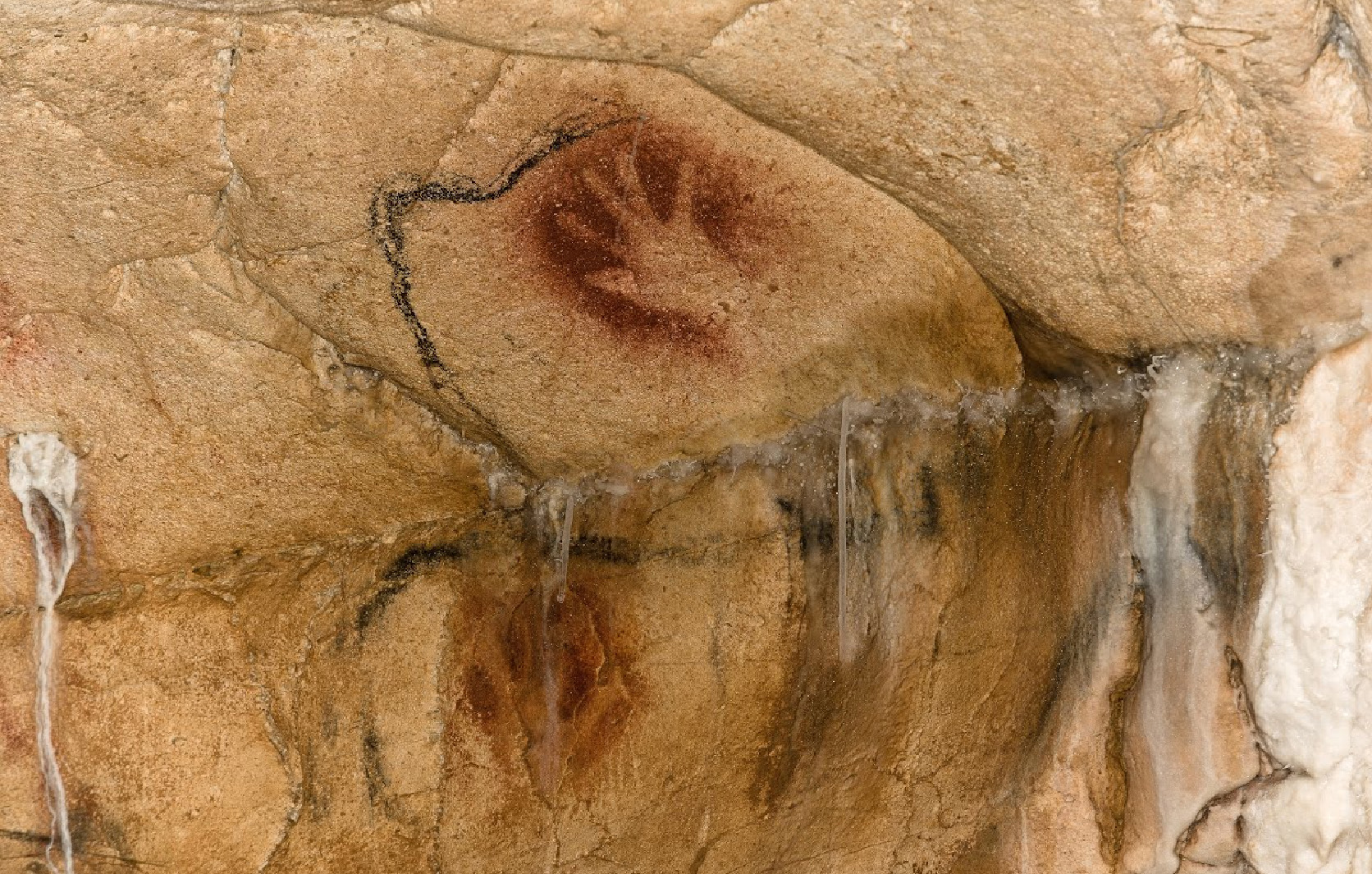
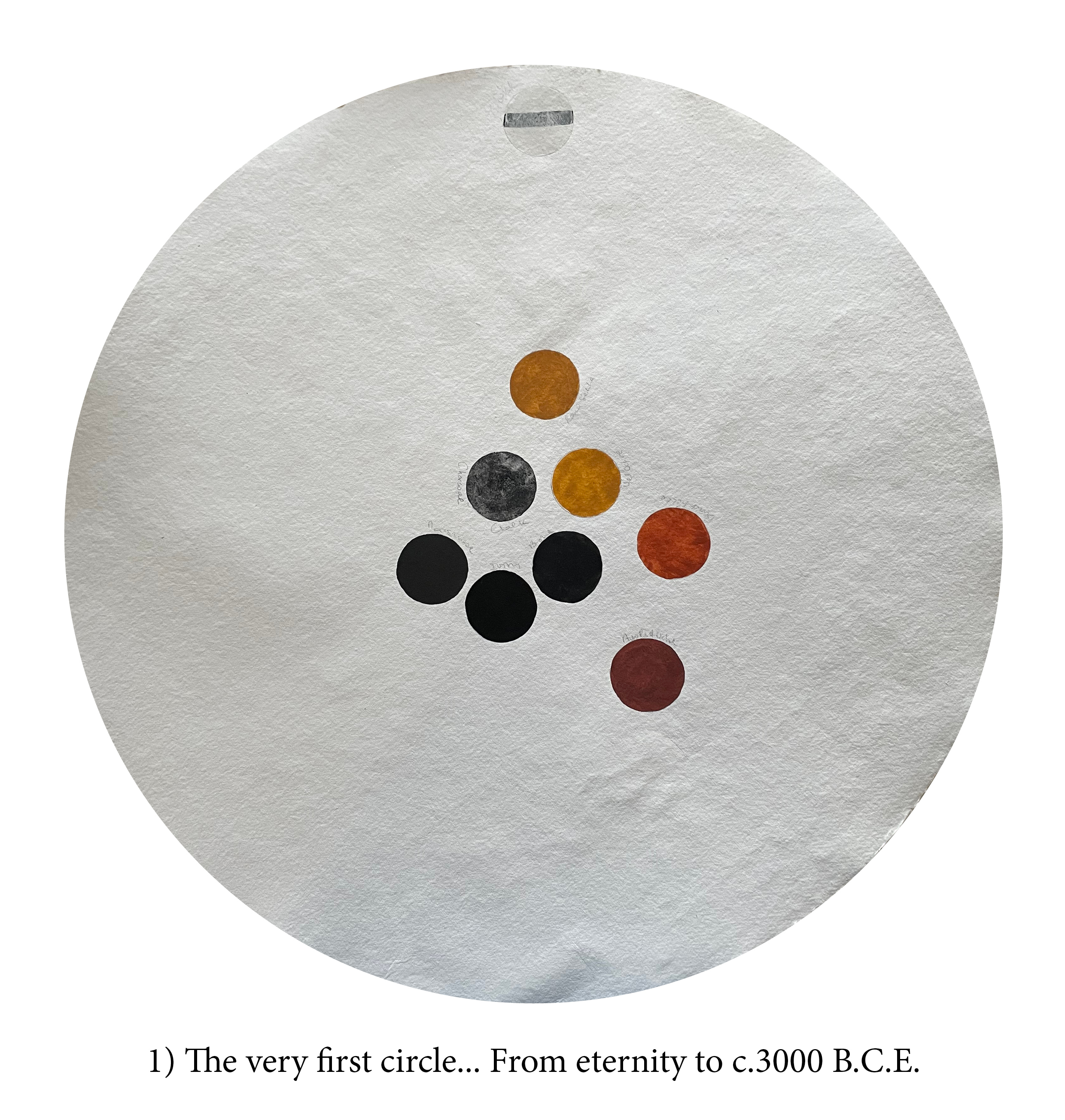

This red ochre comes from South Australia, on (now returned) Aboriginal land. There are many hues under the red ochre label and I choose this one not so much for its colour (there are more flamboyant ones) but because it comes from an ochre site perhaps in continuous use for the last 50000 years! Red ochre, often named after its place of origin, seems to have been our favourite one from the beginning of Time.

Although yellow ochres are far more abundant than red oneson the planet (or maybe because?) they have not been revered and used as much. However, at some stage in the late Pleistocene, we understood how to ‘burn’ ochres and turn yellow into orange, burnt-orange, red! So that when you’re looking at red ochre, even in cave art, it could be yellow ochre!
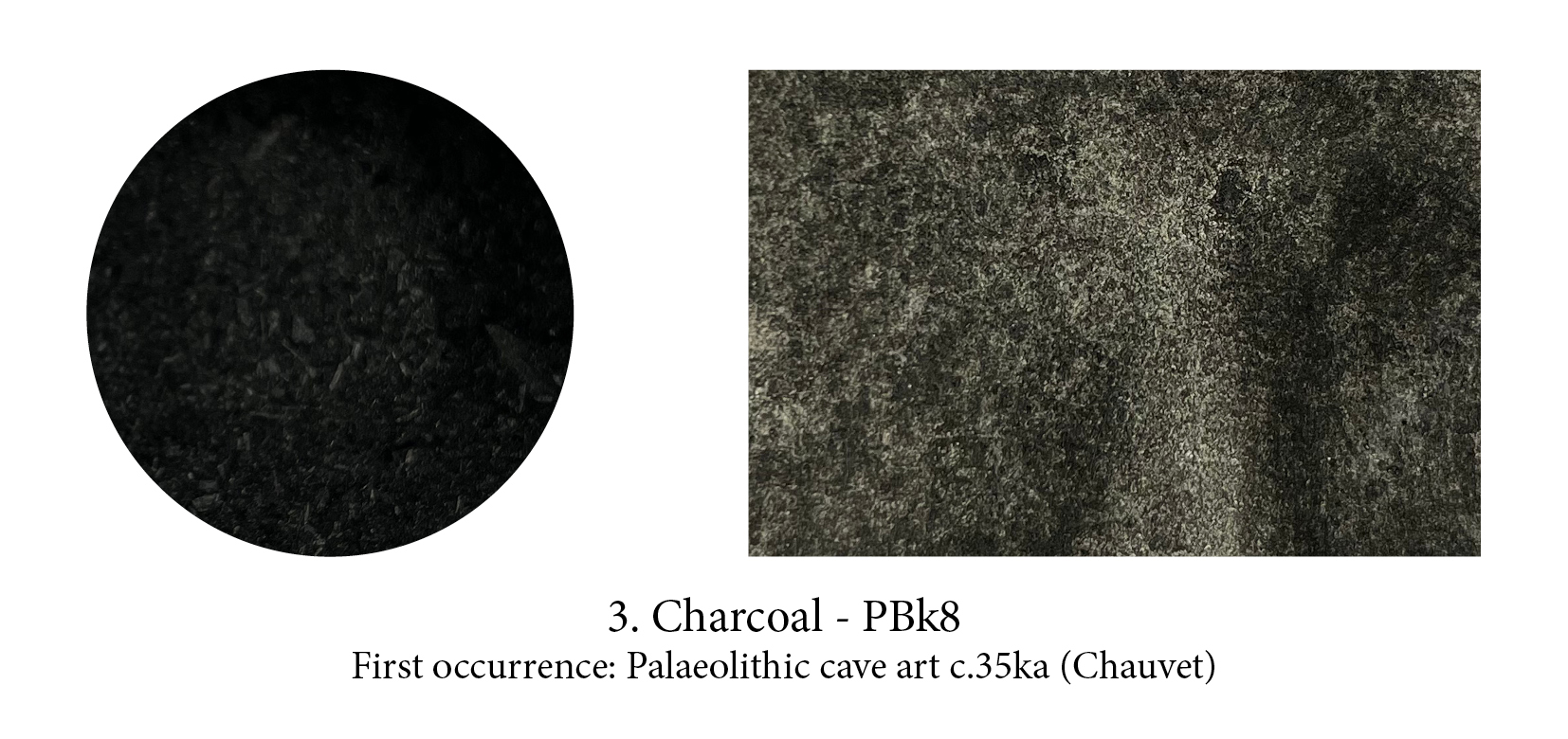
Charcoal, a wonderful ready-made drawing crayon, makes a rather weak paint unfortunately. Artists’ charcoal today is mostly made from calcined willow but you can successfully char peach stones, grape seeds and vine twigs… The Romans sweared by the blue grey tones of vine charcoal and had even found a way to carbonise the dregs (the better the wine, the darker the black apparently!)

Chalk is a specific variety of limestone formed entirely from microscopic, fossilised, phytoplanktonic algae. Present all over the globe and easily used, as these rocks are very fine
grained and generally pure, it had no rival until Lead White was invented. With the advent of oil paints (in which it turns transparent) it was definitely relegated to gesso grounds or used as a extender in pastels.
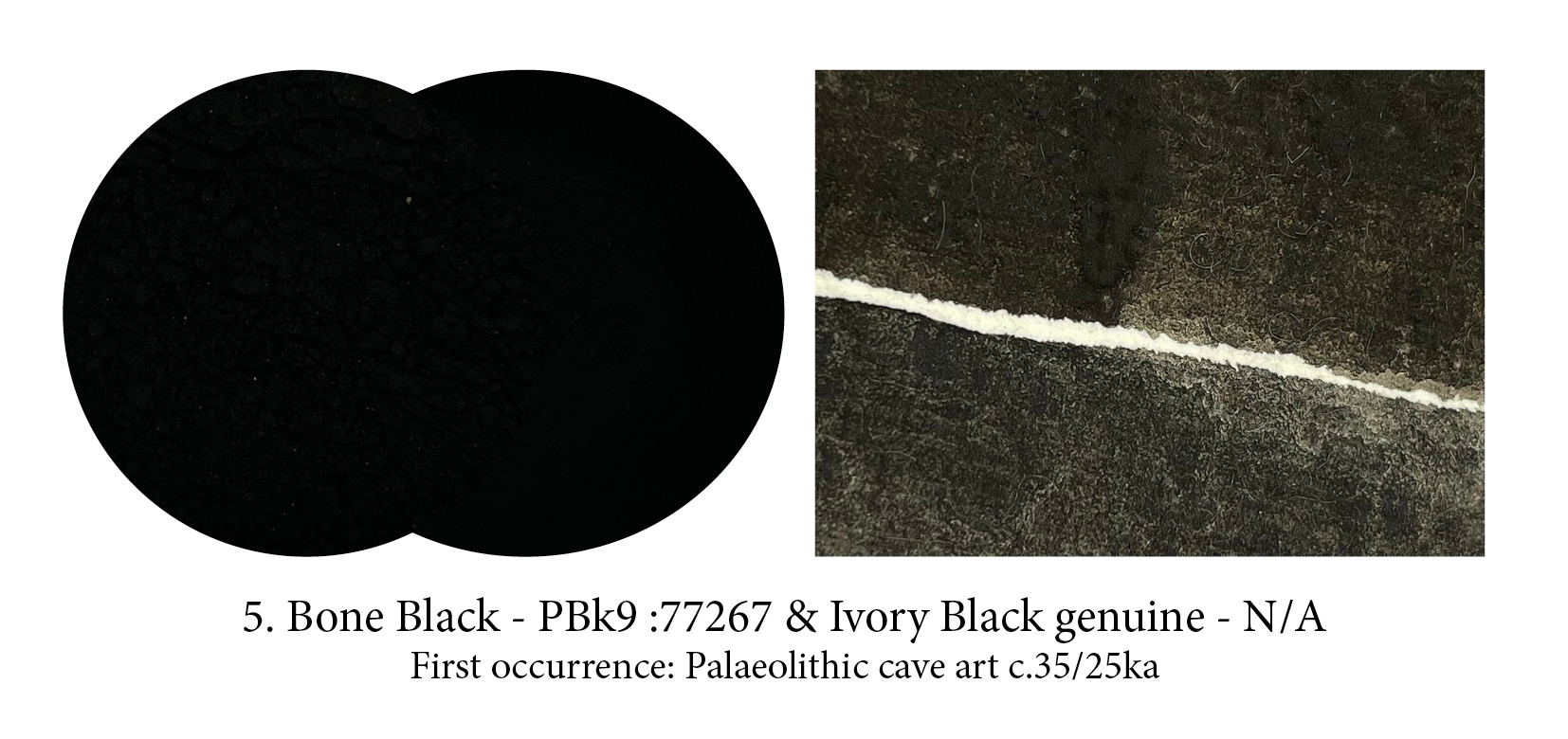
Prepared by charring bones in the absence of air (otherwise you get Bone White) it is rare today for your tube of Ivory Black to contain genuine ivory (for very good reasons) and although you can still procure some, at a price, you’ll have to decide if you can justify the expense — definitely artists
always found it offered a deeper, more interesting blackness…. and it really does!

Very few paint companies still offer Manganese black, and yet Lascaux’s ‘artists’, who had other charred blacks (bone, charcoal), were apparently ready to walk more than 250kms to source the scarce complex mixtures of manganese oxide minerals — including groutite, hausmannite and manganite — seen in their artworks.

Siennas are iron hydroxide-rich earths, to which they owe their yellow-brown colour, but are distinct from the ochres in that they contain minor amounts of manganese oxides. Not as
abundant on the planet as the ochres, they arrived a bit later on artist’s ‘palettes’ but certainly found a niche there as, even today, most painters couldn’t do without either of these.
 in bed with mona lisa