WHAT?
II. What’s in paint?
B) Binders
Binder, when I first heard the word, was only evocative of books… something (thread + glue + leather embossed in gold?) that would efficiently keep the words tight, the folios in their intended order, the story making sense of this crazy world, perhaps. Could there be an analogy with binders in paint? Holding together pigments, these purposeful agents will, in the hands of some, indeed turn into meaning, and stories, and beauty… perhaps even help us make some sense of this crazy world, so why not? And so, a little story to begin with…
My Introduction to Binders
From my grandfather’s house on the Belgian North Sea coast, we had three cycling pilgrimages we would religiously perform at least once a year. These involved food, clothing and art, quite the essentials, you will agree.
The first was to Holland via the beach (only one way because of the tide and, although not that far, twas’ hard work biking on the sand.) On the terrace of the huge and rather desolate hotel, which was the border landmark, we would devour a few delicious grey-shrimp-filled croquettes, then leisurely return via flat roads and a little chapel we would always visit.
The second was to Zeebrugge, aiming to get there more or less when the fishing boats came in. They made a fabulous soup on board, which would arrive steaming hot and fragrant—a very needed treat in winter—and, before or after, we would get equipped at the Coop with the same navy blue tight-knit jumper I have worn all my childhood… in all sizes.
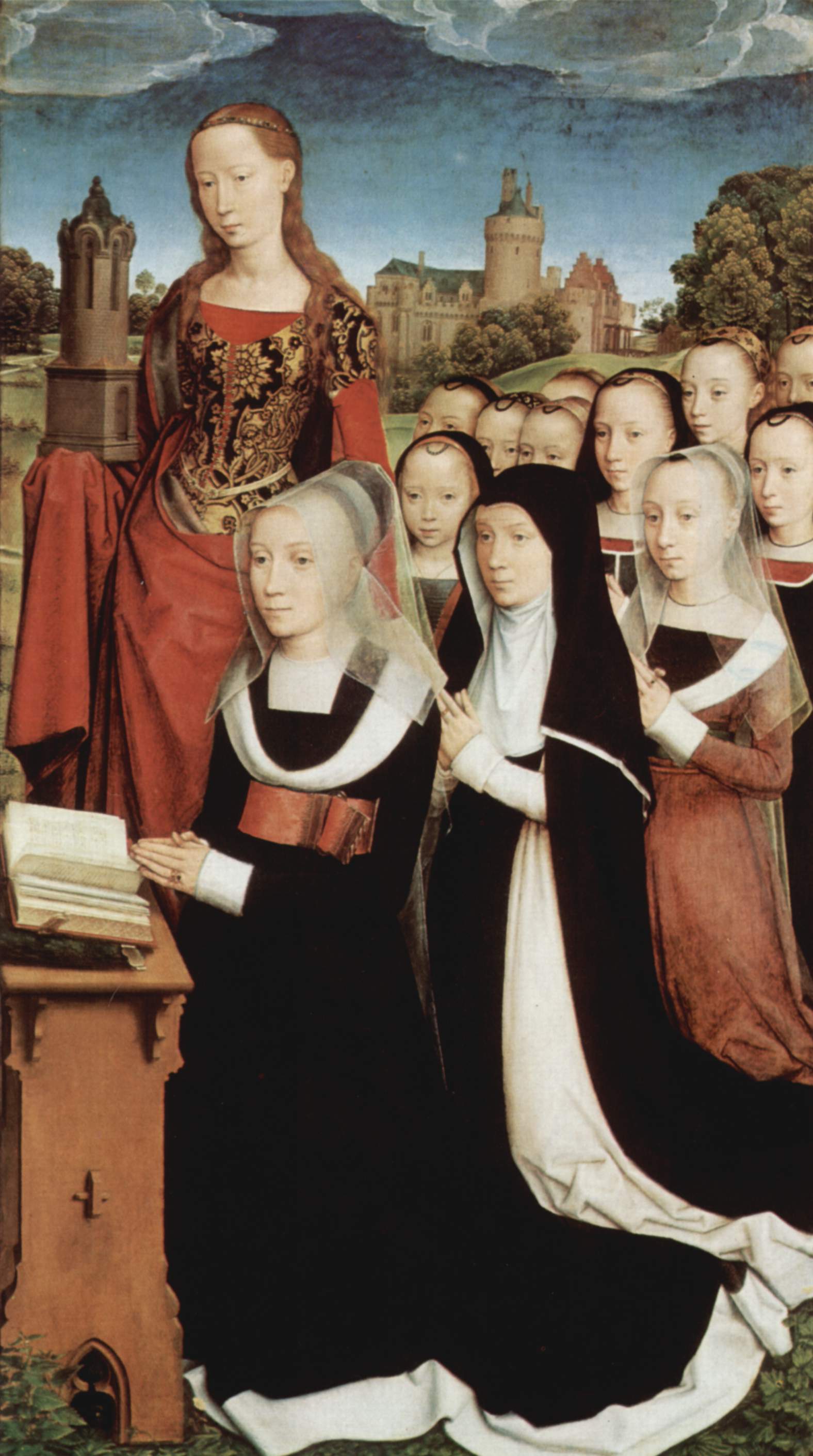
The last mission was Bruges. We tried to pick a sunny day, as the road was long to this neighbouring town (nearly 40kms return), but the weather shifts quite quickly in Flanders, so often it turned into something of a feat struggling against wind or rain. What kept Mum pedalling was, I presume, the anticipation of the reunion with all her beloved Memlings, van Ecyks and Boschs. What kept my little legs going was, to be honest, the lolly shop at the end of the canal ways, which sold over-sized gummy mice and cuberdons, a beyond sweet pyramid of purple delight, crystallised on the outside but with a liquid heart. (Come to think of it, that one must have been virtually 100% gum Arabic with a dash of colouring!) Nevertheless, I saw the works and eventually fell in love with the Flemish Primitives. There are not that many in Bruges, even if most of them are masterpieces, so over the years, they became friends. That little girl praying at the bottom of the work—a patron’s daughter, no doubt—looked a little bit like me, enough anyway for me to identify. The canal views and crenellated brick houses seen through the windows of the paintings could be seen too from the windows of the museums. And when my mother told me the Van Eyck brothers had invented oil painting thanks to the flax growing all around Bruges and its seed which produced the perfect binder painters would, for generations, delight in… it seemed to me, having just cycled through these very fields, a perfectly natural explanation.
It turns out she was wrong1, but that was and still is a myth often told. Nevertheless, they did perfect it. At first, oil paint would dry so very slowly that painters did not enjoy working with it much, but the choice of a siccative oil, such as linseed, and an understanding that if you ‘cooked’ that oil for a few hours it would become even faster drying + left it in the sun many months so that it would pale and the yellowing effect of it be reduced, was becoming widespread, even then. So, where was the revolution? Not in the paint itself, but in the extender medium they used. In fact, they were so sure they had invented something extraordinary… that their secret recipe followed them in the grave! As a result, the composition/ratio is somewhat uncertain (especially since solvents evaporate, so no one will ever be sure), but we believe it must have contained a volatile solvent, such as turpentine, and resins which solidified the pictorial layer whilst giving it that very rich glow their paintings have.
Jump to the next section of the book by clicking here
Alternatively click on the Table of Contents to browse the sections.
You can also subscribe to my blog at the bottom of this page,
and you’ll receive Hues in Tubes in your inbox… as it gets published!
Additional information & references
- There are some oil paintings dating back to perhaps as early as the 11th century. Yet, it was still a very uncommon practice until the early Renaissance. ↩︎

Discover more from in bed with mona lisa
Subscribe to get the latest posts sent to your email.
 in bed with mona lisa