WHYEVER?
Hues in Tubes… and how they made a name for themselves
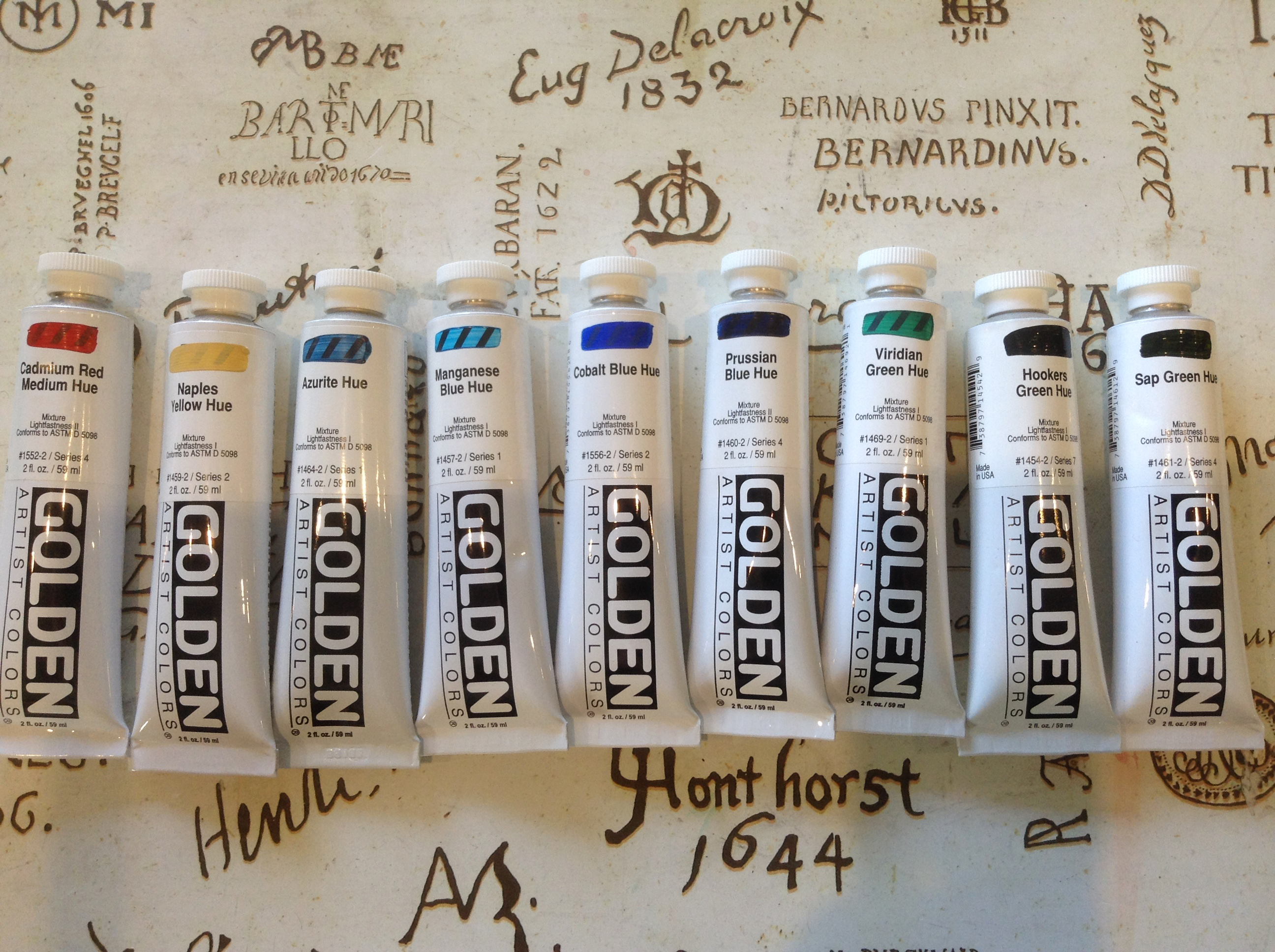
Before I proceed, and yet again for the sole purpose of your edification as I would rather not serve you that somewhat disappointing entrée, but the truth is… hues on tubes are indeed bringing you weird news!
The Oxford English dictionary defines “hue” as a virtual synonym for colour. And, yes, perhaps that works most of the time in most colour worlds, but as soon as a hue enters an art store, something strange happens to that word forcing us, before we can even launch into hues in tubes, to pause and discuss hues on tubes.
For one, as said, poor beginners trying to buy THE green/red/blue hue reproduced on colour wheels must understand this is not an option. This elusive notion doesn’t have a material counterpart, so you’ll have to pick one of the many greens/reds/blues… with even white and black offering an array of options. Then, after picking the closest one to the colour you wanted, you’ll probably need to mix it to the perfect one you had in mind, as Picasso lamented:
“They’ll sell you thousands of greens. Veronese Green and Emerald Green and Cadmium Green and any sort of green you like, but that particular green, never.”
Colours not only ‘unnameable’ then but ever so materially elusive…
This being said, many tubes do bear the word “hue”, so how did it get there? Well, all of these are, in fact, politely letting you know that you’re not going to get that pigment… but a lure, a substitute, a fake. For example, a Cadmium Red hue warns you there’s no Cadmium Red in the tube but a cheaper mix. A Manganese Blue hue contains no Manganese Blue, as the pigment is now obsolete. A Naples Yellow hue does not contain lead anymore, so is not the original Naples Yellow. An Indian Yellow hue doesn’t come these days from Mirzapur, India, nor is it made in the cruel manner it was once obtained from. A Prussian Blue, a Smalt, and a Hookers Green hue are now mixes of/or entirely different pigments that have replaced the previously fugitive or incompatible ones. And the list goes on…
On the other hand, do not expect to find Vermillion followed by hue. I’ve personally never seen it, anyway. Although, of course, what’s in your tube is not a plant based blue nor our dazzling medieval mercury and sulphur combo pigment but a Modern synthetic hue. Never labelled thus… why? Somehow along the ages, vermillion, like indigo, seem to have graduated from a pigment name to a colour term, a very dark blue and any reddish-orange or orangy-red pigment you please.
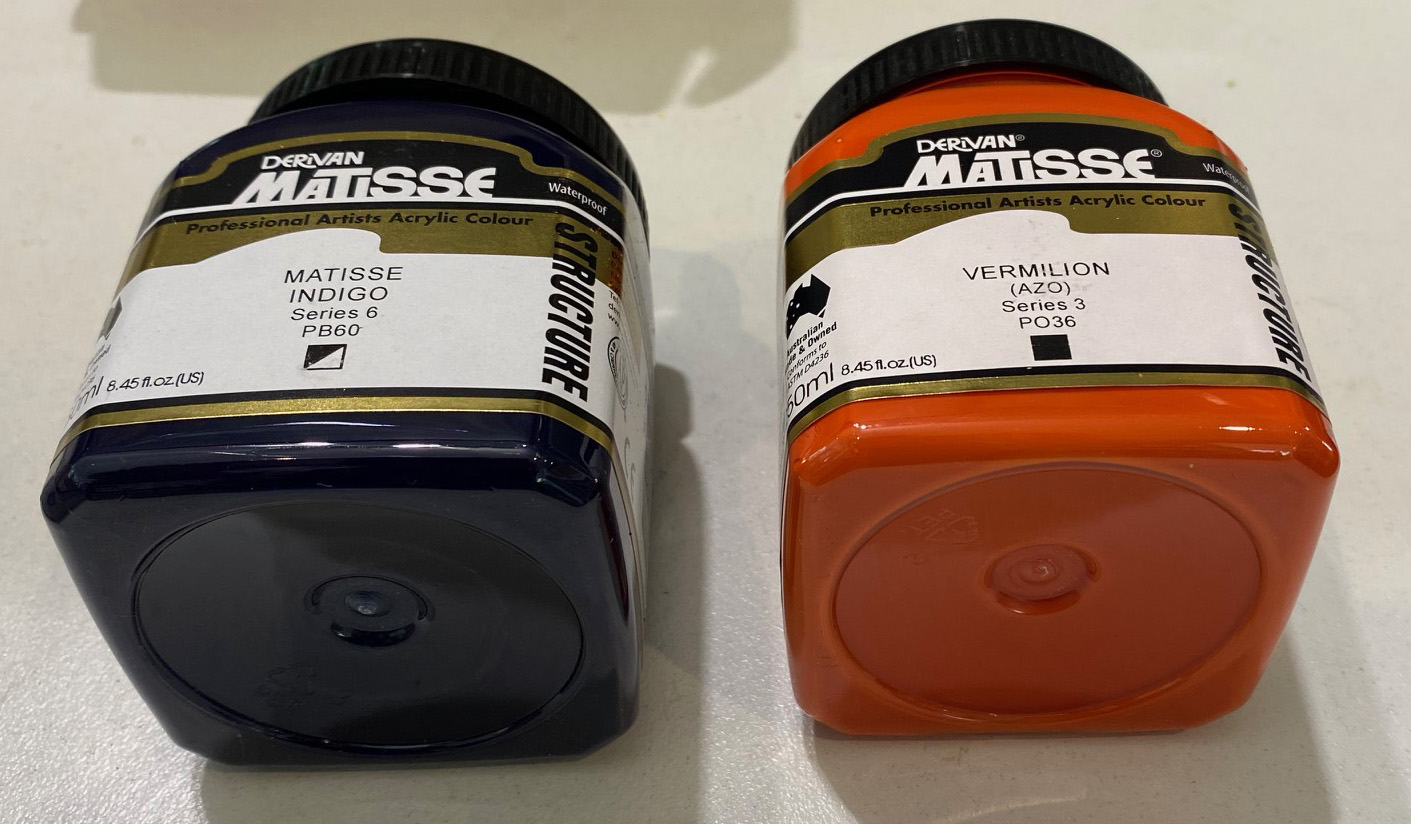
So let’s put aside these treacherous hues now. Surely all the other pigments are the ‘real stuff’ if named for or after this and that? Well, indeed some are, which I’ve tried to throw into neat categories, others, hum…. you’ll have to decide for yourselves!
Jump to the next section of the book by clicking here
Alternatively click on the Table of Contents to browse the sections.
You can also subscribe to my blog at the bottom of this page,
and you’ll receive Hues in Tubes in your inbox… as it gets published!
Discover more from in bed with mona lisa
Subscribe to get the latest posts sent to your email.
 in bed with mona lisa
Lets not give trumpisms any traction…kind of a sore subject to some of his subjects…
Teri
Teri Power Woodsia Studio @ferninwood http://www.teripower.com
>
Oh Lord! Did I think of that when I wrote this bit of the book? (to be fair, some years back) And I did like the nice rhyme of hues, tubes and news… but I take your point and I’ve now changed the title of that section!
I appreciate your response. I realize that you have a following from all over the world. And that many are not affected ……yet.
Sadly, I think we are, worldwide, all affected by fake news and what is going on in your country!
Thanks for the entertainment (and spelling colour properly 🙂 )! I admit I felt compelled to look up the origns of “Indian Yellow”, to see why it was cruel – so thanks for the education also!
My own recent self-amusements (messing about with creating “traditional” sealing wax) had led me down the rabbit-hole of colourspaces… something I thought I’d left well behind in my days as a programmer for the printing industry. Vermillion came up in that context naturally… it being the de facto “real” colour for sealing wax.
A most entertaining meander through history that I thoroughly recommend. I’d never even considered the concept of “one pot” colour mixing (as historically practiced by sealing wax manufacturers) to minimise cleaning and inter-batch wastage.
Again: thanks for the read – I shall be sure to drop by again soon.