WHYEVER?
Hues in Tubes… and how they made a name for themselves
Some paints are named after… someone who could be…
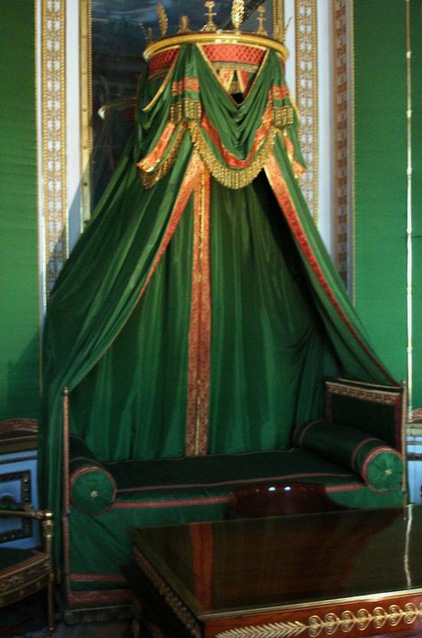
One ring down from deities, certainly, but at the time considered their legal representatives, the second-best thing for a pigment was a bit of regal patronage.
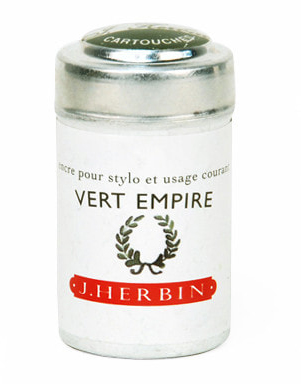
Emperor Green, another name for the deadly Emerald Green, may have had reason to make itself small, yet the green of Napoleon’s wallpaper, curtains and Empire furniture still exists in fabric and house paint catalogues today. You can even find an interesting mossy, coppery-green ink in the cute J. Herbin bottles and cartridges named Vert Empire, but no art paint.
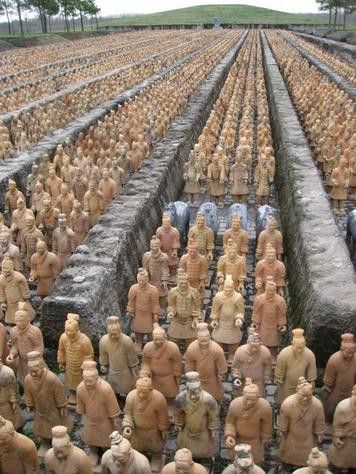
Long before this toxic hue existed, another emperor decided to be buried with his entire army—this one not in solitary exile but with presumably an ego as inflated as Napoleon’s and a need for company just as pressing it seems. Although no records exist of how many potters died from exhaustion in the process of producing Qin Shi Huang Di’s fantom terracotta troops, at least no actual man was put in the grave with him! A few painters must have died of overwork, too, because, and despite how used we are to seeing them in their ochre uniforms, each and every one of these 800 soldiers was dutifully painted from the tip of their nose to the tip of their toes. The intense Han purple, on the palette of those artists working around 210B.C.E., seems to have been used lavishly for the trousers of these gentlemen… most certainly a display of their patron’s wealth, as the earliest synthetic purple pigment was not cheap to produce.Qin Shi Huang Di, the first emperor to unify China under a single dynasty, gave his name to it (Qin is pronounced Chin) but it was the next dynasty, the Han’s, the purple and blue pigments were named after—in order not confuse them with other Chinese blues and purples.
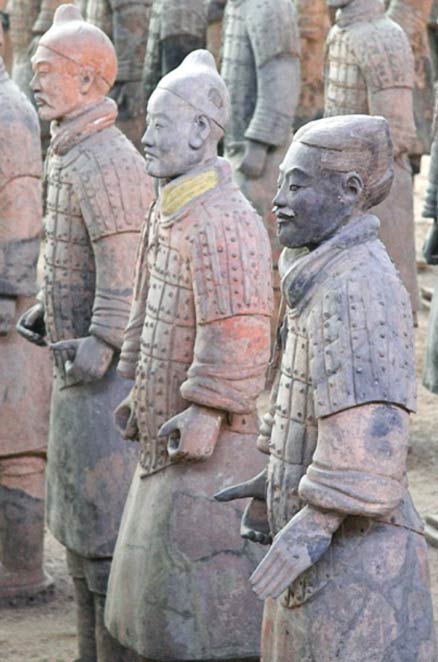
Both Han Purple and Han Blue were barium copper silicates which could be mixed to produce intermediate hues, yet they differed in their formula, structure, and chemical properties. Han Blue is remarkably similar in composition and manufacture to Egyptian blue (a calcium copper silicate, however), if slightly less fluorescent. It has been ventured the Chinese might have gotten the recipe for the synthetic pigment from the Egyptians, but it seems unlikely as theirs also had lead components not existing in the former one. Egyptian Blue, you might remember, had a green variation produced from a higher firing temperature and with the Han pigments too, the colour happens in the kiln. Not from a variation in temperature though (900°C will do), but from patience. Han Purple forms first, in around a day, but double the firing time and it will break down and release the blue. What mastery there too!
The destiny of all four pigments seems to have further similarities as Han Purple and Blue, which had in fact been around since sometime during the Western Zhou period (1045–771B.C.E.), also disappeared from artworks at the end of an empire, that of the Han dynasty around 220A.D. Furthermore, just as Egyptian Blue’s fluorescence confirmed the Parthenon as coloured, Han Purple’s legacy lives on most surprisingly. Under certain extreme conditions, intense cold or strong electromagnetic fields, the pigment has been discovered to be a highly conducting material with the ability to morph its three-dimensional structure into a 2D one! Research into the possibilities this could open for quantum computers and other materials has only just begun…
Trust the purple to show off, however! This colour, always dear to produce, was at all times intimately associated with privilege. Unsurprisingly then, Royal Violets and Imperial Purples can be found on tubes, but it doesn’t stop at that hue… I was able to track four different Royal Blue pigments, plus a Noblesse Blue, a single King Red but three King Yellow including the synthetic orpiment which has as matching consort, Queen Yellow, another mercury sulfate pigment. With such a regal choice, it is easy to understand that none of these relate to a precise hue, nor to a precise king or queen for that matter…
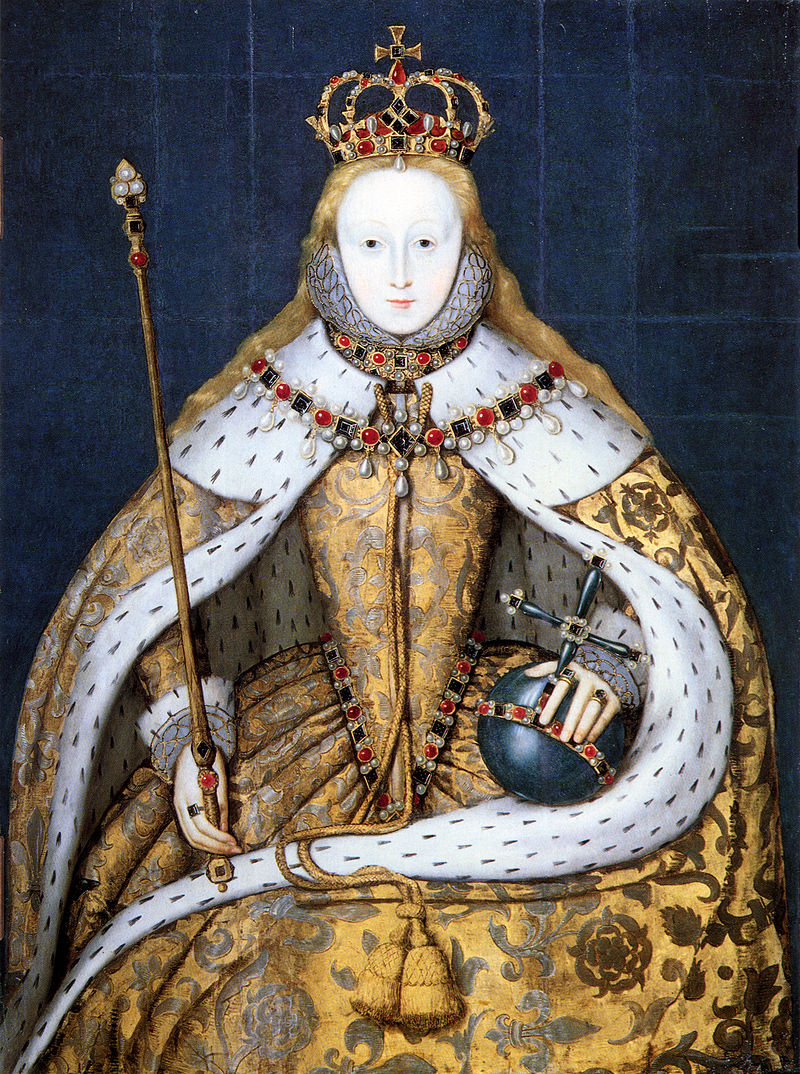
Perhaps one is a bit different though as this Queen blue, first recorded as a name in England in 1926, was a hue called before then, and since 1661, Queen’s blue. I sensed something a little more personal there so I tried to track an event around the date but could only come up with the marriage of Catherine of Braganza to Charles II of England. The Portuguese lady is credited with introducing the British to tea-drinking, which was then widespread among the nobility of her country, but no blue link in sight… except perhaps all her dresses in the early portraits. Of course, I know not if this counts or started a phase but what is certain is that, when once in a while an interesting queen is on the throne, she does seem to set the colour trend. For example, and while her cousin Mary was making a martyrdom statement in crimson, the first Elizabeth introduced Ceruse White as a flesh colour and a copy cat devotion to her auburn hair with the result that, way before any Titian Red, English court ladies began sampling atrocious concoctions of rust, lead and sulphuric acid on their scalp, while the men were giving their beards the same treatment. The trend apparently even reached the royal stables with horses’ tails and manes getting the auburn makeover!
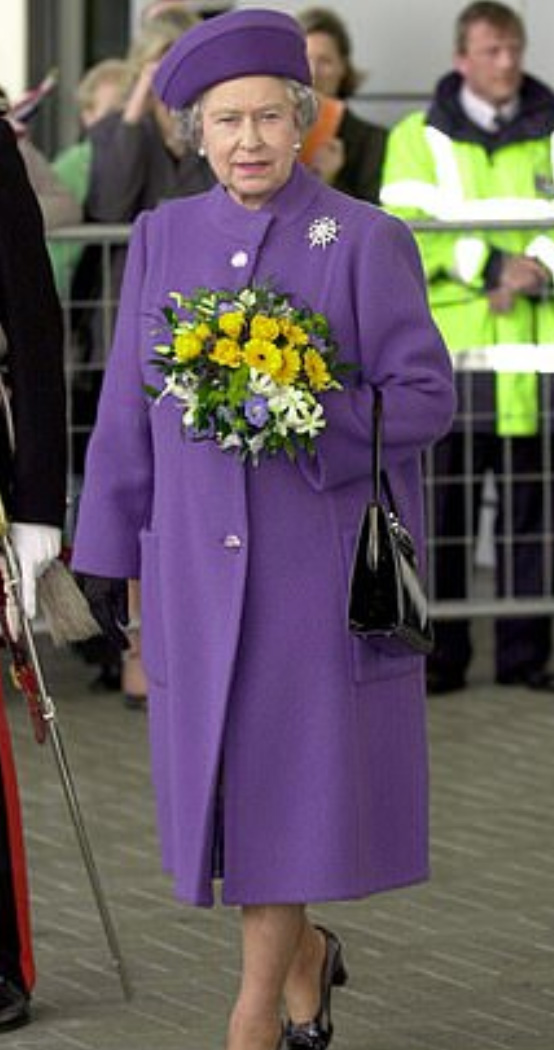
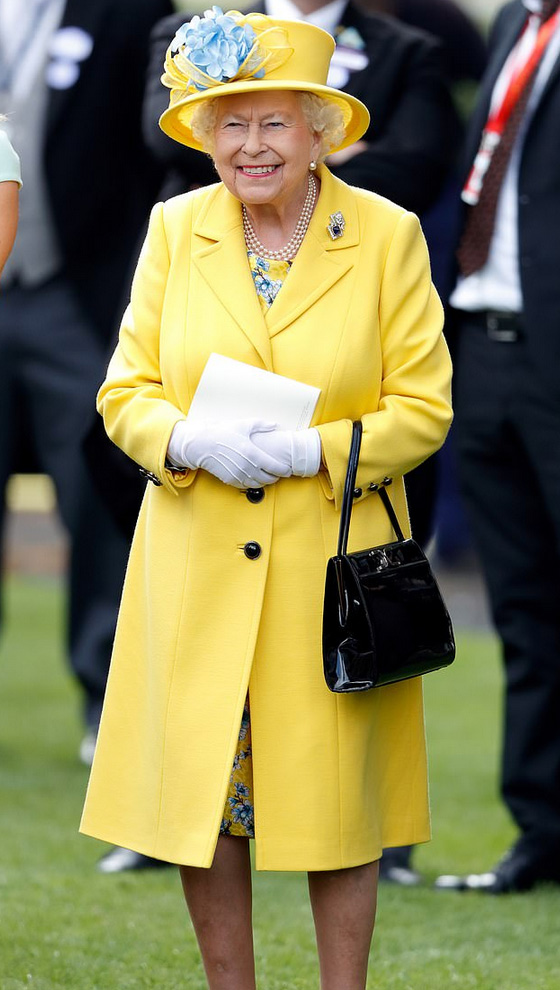
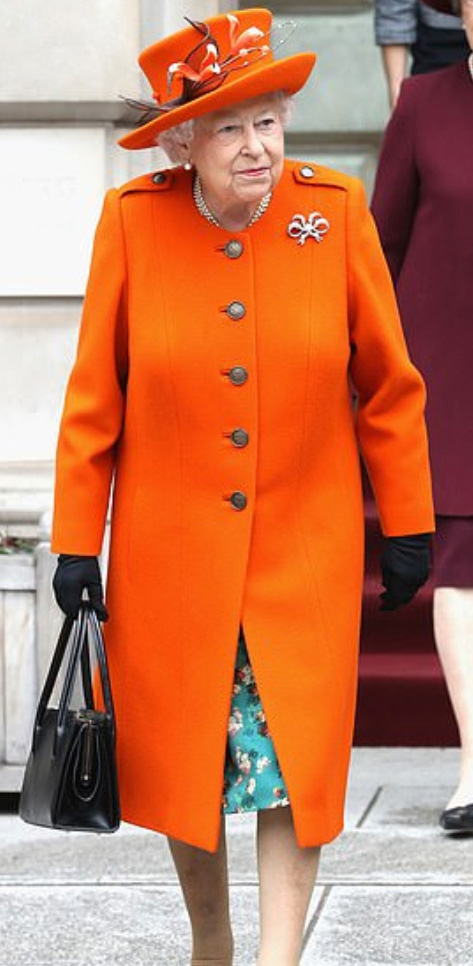
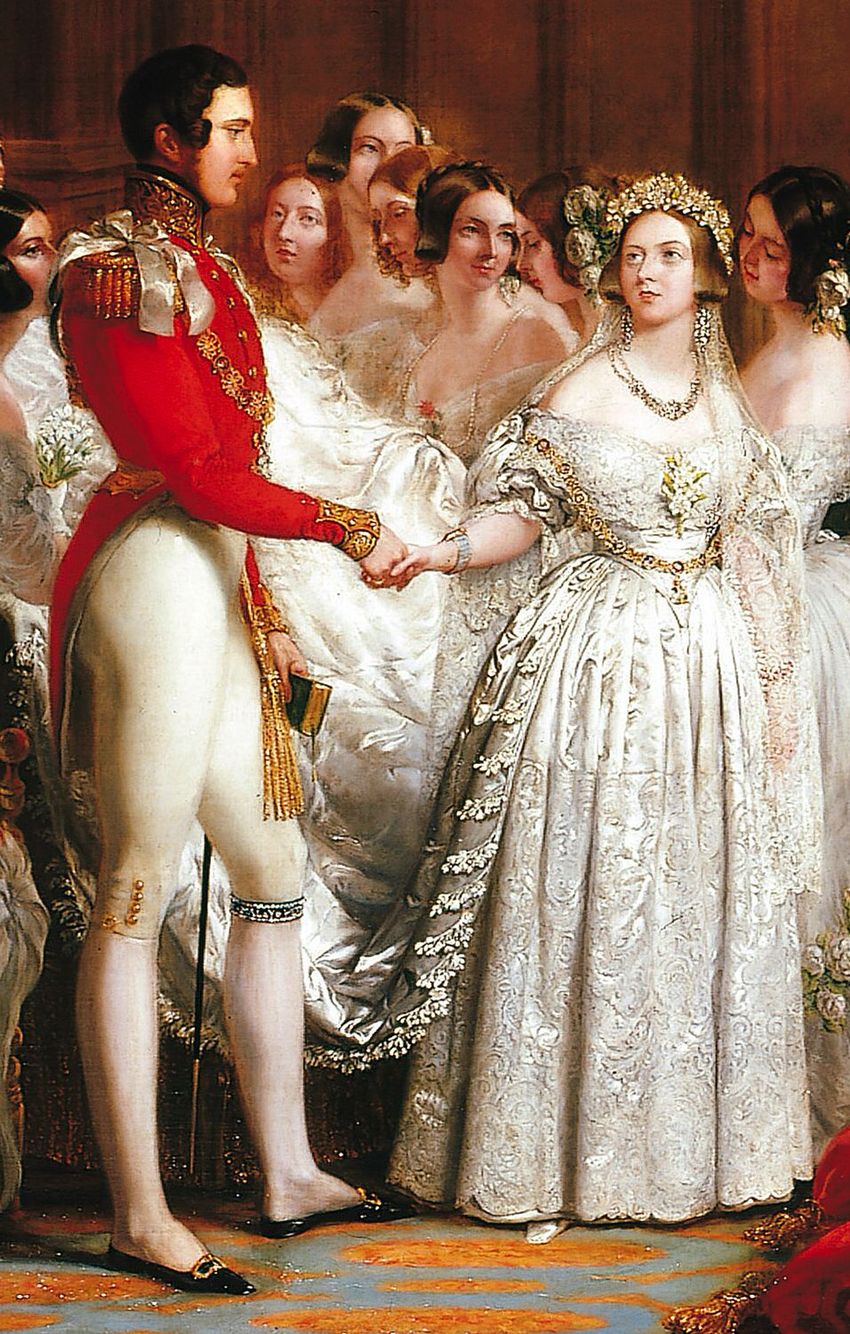
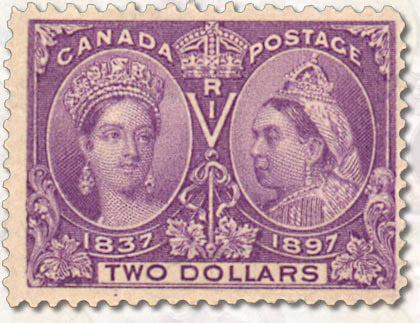
Nowadays, and even if the second Elizabeth enjoyed playing dangerous complementary colour combinations in her outfits (having absolutely understood these stand out and being in the opinion that “The Queen should be seen”), as far as I know, these combos didn’t result in any untimely deaths! (Or pigment names!) It could be argued that amongst all these dames, the ultimate trendsetter was, surprisingly, the rather sedate Victoria. Marrying in white became just the thing after she did, while visiting the Universal Exhibition of 1851 attired in Perkin’s new mauve most certainly marked the official start to violettomania. During her reign, probably as a tribute, a Victoria Blue and a Victoria Green made it on the colour stage but only the green pigment is still available and found, if rarely, on paint tubes today.
So much for England.
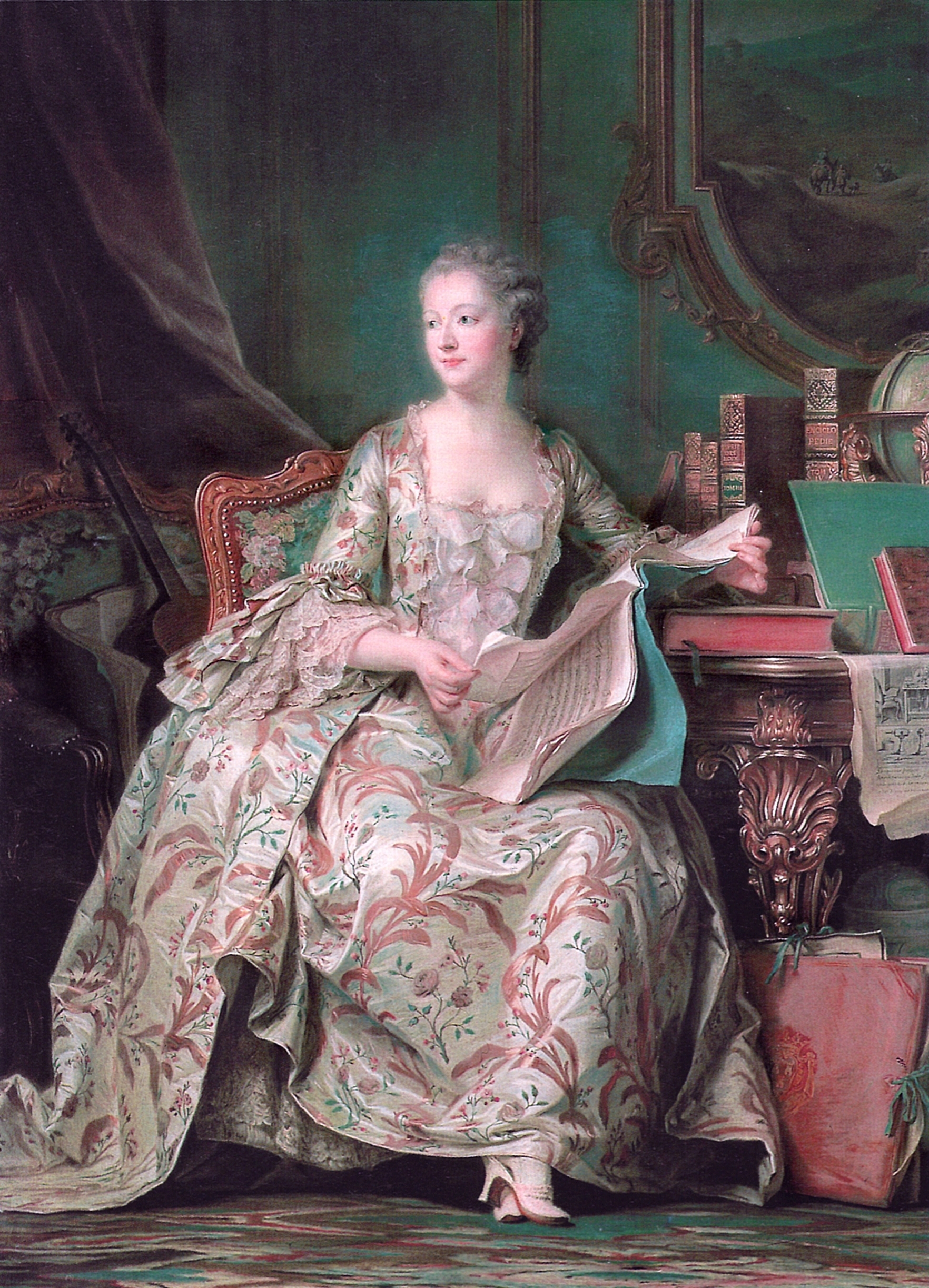
Meanwhile, on the other side of the Channel, meet an “Éminence Rose” in the person of Madame de Pompadour, mistress of Louis the XVth. From the start, colour played an important part in this lady’s life as the future Marquise staged not one, but two ‘chance’ encounters with the King, one in a pink phaeton, wearing a blue dress, and one in a blue phaeton, wearing a pink dress. The plot succeeded and she quite seduced him… proceeding then to introduce her Pompadour Pink to Versailles not only in attire (both for men and women) but also via Sèvres porcelain or roses named in her honour. Marie Antoinette, wife of the next King of France, Louis XVI, tried her very best to continue this pink tradition (even dyeing the little lambs of her toy farm that colour) yet less than rosy circumstances had her switch to bleu, blanc, rouge dresses… A colourful gesture to the Revolution, sadly, not sufficient to save her life.
Above more or less rounds up the noble colours (although I did find a Knight’s White (PW5), presumably referring to his shining armour), and an Isabella White used mainly for horses but, supposedly, the colour of the shirt of Isabella the Catholic who vowed not to change hers until her husband Ferdinand II of Aragon would return from the siege of Grenada. The eight-month wait resulted in a rather beigy off-white colour… most definitely a ‘dirty’ one!
Still, I owe you one last noble soul straight out of Greek mythology. Cadmus was his name, and he was most definitely “born in the purple” being the son of Agenor, king of Tyre. His sad fate was sealed, however, when Zeus abducted his sister Europa disguised as a white bull, and their inconsolable father entrusted Cadmus and his brothers to go search for her and never return without her. One by one, the brothers gave up and settled along the way while poor Cadmus and his mother Telephassa carried on. She finally died of grief and, at a loss as to what to do next, Cadmus went to Delphi to seek advice from the oracle. He was told to give up the quest and settle his own city (as you do!) Thereafter, the story becomes convoluted to the extreme. I will spare you the details of buried dragon’s teeth, eternal revenge and his overall rather miserable life until he was turned into a serpent to explain why this legendary founder of Cadmea, now the ancient citadel of Thebes, gave his name not to one pigment but to a whole family of them: the Cadmiums.
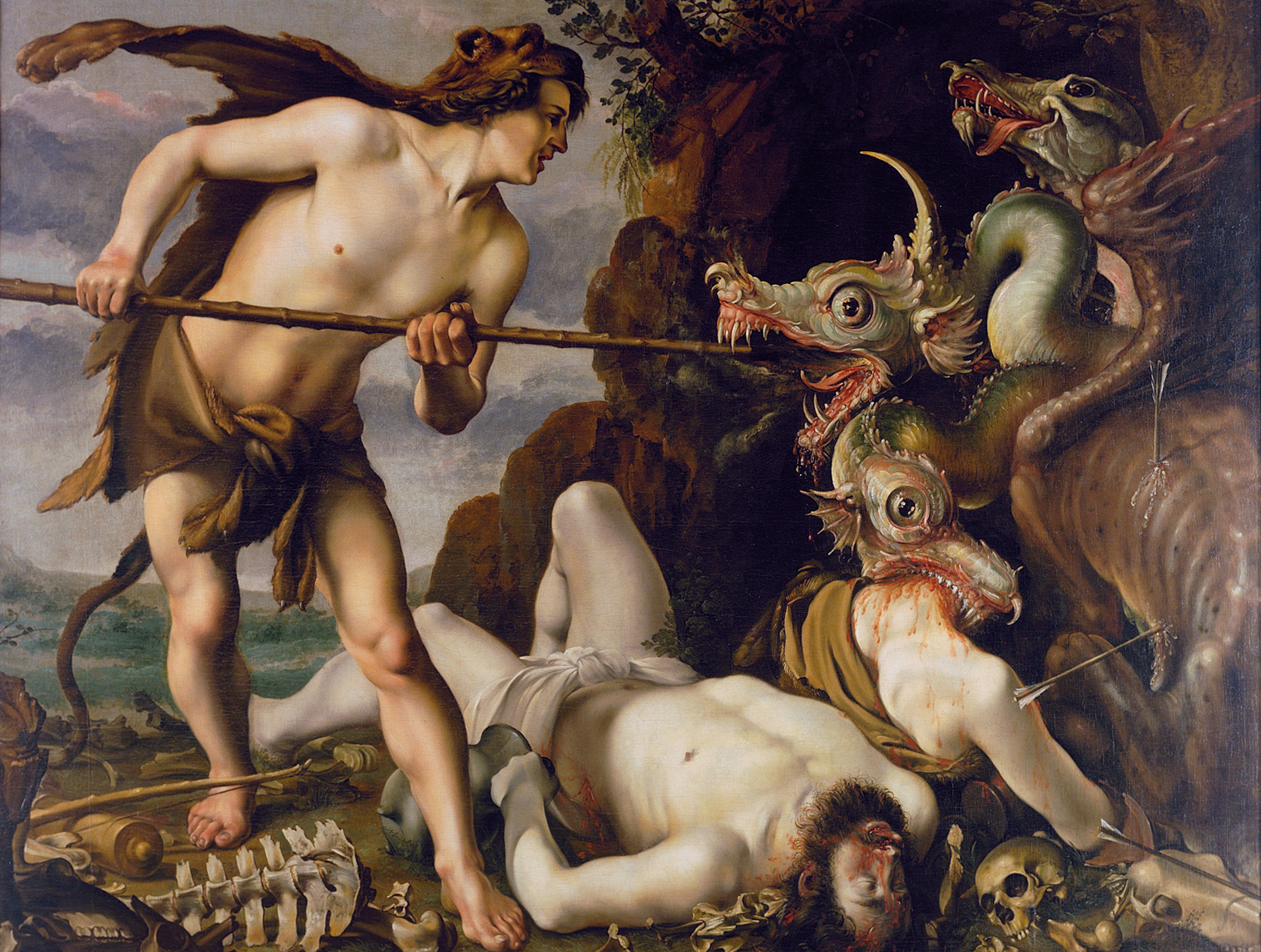
It so happens that the bluish-white metallic element, extracted in 1817 by German scientist Friedrich Strohmeyer from zinc carbonate, was named by him after the Latin name cadmia (used by ancient naturalists for various Earths and oxides, especially zinc carbonate.) The word came from the Greek kadmeia, and the reason Kádmos’ name was given to these cadmium-bearing mixtures of minerals in the first place was that this Cadmean Earth was originally found in the vicinity of Thebes. There, the surrounding land is still given its legendary founder’s name, and to this day, Thebans are even nicknamed Kadmeioi.
Please forgive this Homeric voyage for a simple name yet, before we leave all myths behind, please too give the unfortunate Cadmus a loving thought as he is also credited for introducing the Phoenician alphabetic script into Greece, with (more or less) the same letters you are reading now. Letters you can form on elegant paper with… Vert Empire ink, if you so wish!
Jump to the next section of the book by clicking here
Alternatively click on the Table of Contents to browse the sections.
You can also subscribe to my blog at the bottom of this page,
and you’ll receive Hues in Tubes in your inbox… as it gets published!
Discover more from in bed with mona lisa
Subscribe to get the latest posts sent to your email.
 in bed with mona lisa
One Comment Add yours