WHY?
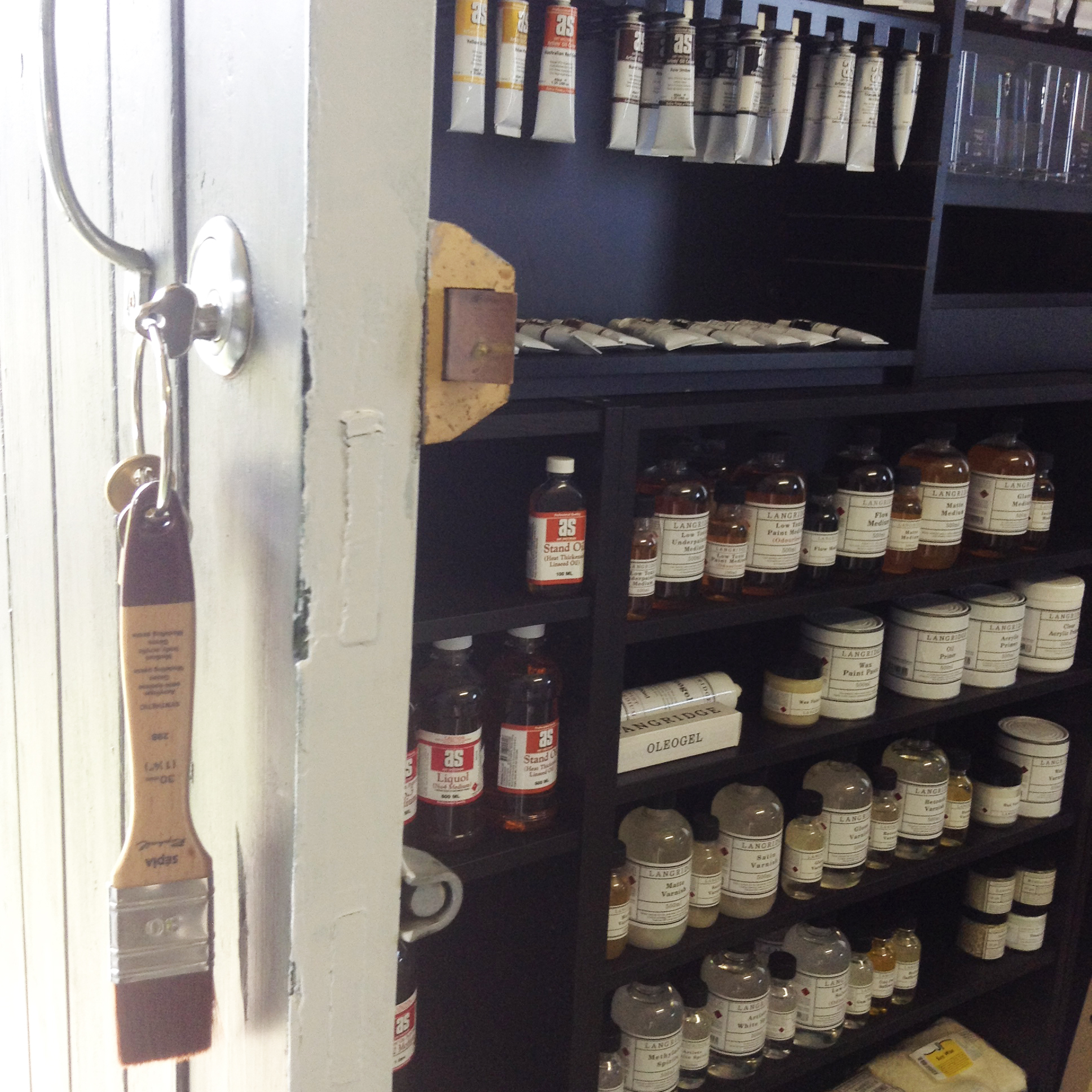
Sometimes I go to my store on a Sunday. The curtains are drawn, the place is cut off from the world, its hustle and bustle, of course, but too its smells. After just a few hours of confinement, all the artists’ ingredients, paints and mediums get a chance to exude their very own subtle odours and, mingled with each other, create a mix that gives good art stores and studios that undefinable turpsy-oily-woody-canvasy-papery pleasant while acrid sort of smell. It’s strong. I like it. I love it, in fact.
I could grab that extra tube or sheet any other day, but the Muse seems totally oblivious to opening hours, and, in truth, I don’t mind returning to this space as a sneaker. Slipping in, I seem to take Colours unaware, shaking themselves from the slumber they fall into after a whole week of showing off their brilliance and calling out to the punters: “Pick me! Pick me! I’m the one you want, the perfect one for the job!” The light is dim, and they need the full glare of the projectors to show off their beauty. No doubt I also have too much imagination, but as a passionate researcher of their interesting idiosyncrasies, they have become friends over the last decade. I know their names and nicknames and, dare I say it in a whisper, their moods too.
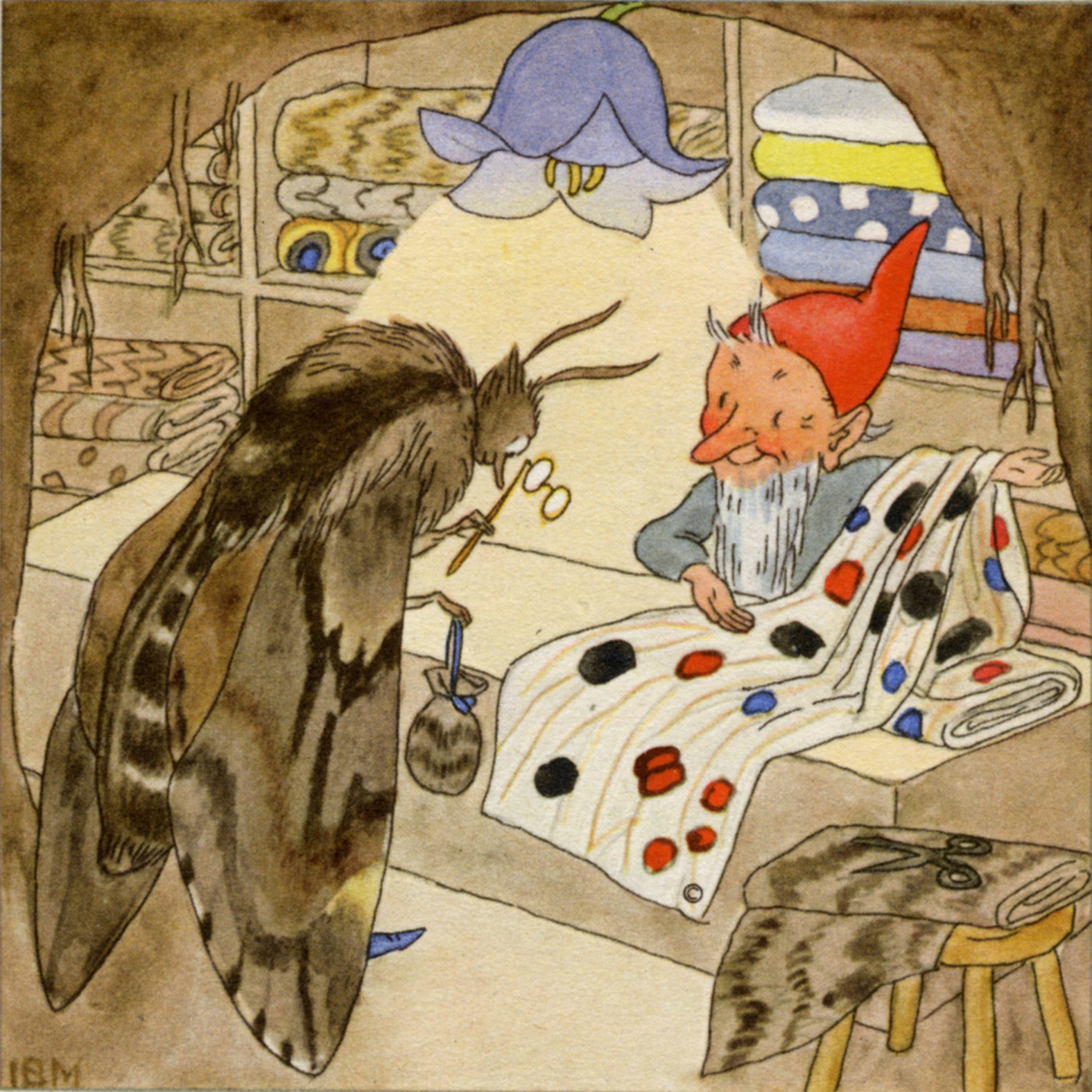
At first, towing my mother (but even later when they became a compulsion all my own), I always found art stores a little bit daunting. Or perhaps a better description would be that they induced in me a curious mixture of awe, excitement and bewilderedness. So much choice, yes, but also so many weird things: huge brushes hanging above teeny-weeny ones with no more than five hairs (might some artists work with both?), exotic names such as Damar resin or gum Arabic on bags of large opaque chunks of what looked like rather unappetising old lollies, fine marble dust next to gritty pumice powder, rows of translucent to golden, to amber liquids with edible names: walnut, linseed, safflower. At first glance, they read like a charming list of earthly bounties from all kingdoms: mineral, vegetal, animal. Yet, if you look more closely, you’re not sure about being a weasel, sable, goat, squirrel, castor or rabbit in that place… least you should be turned into a brush, parchment, wax or glue!
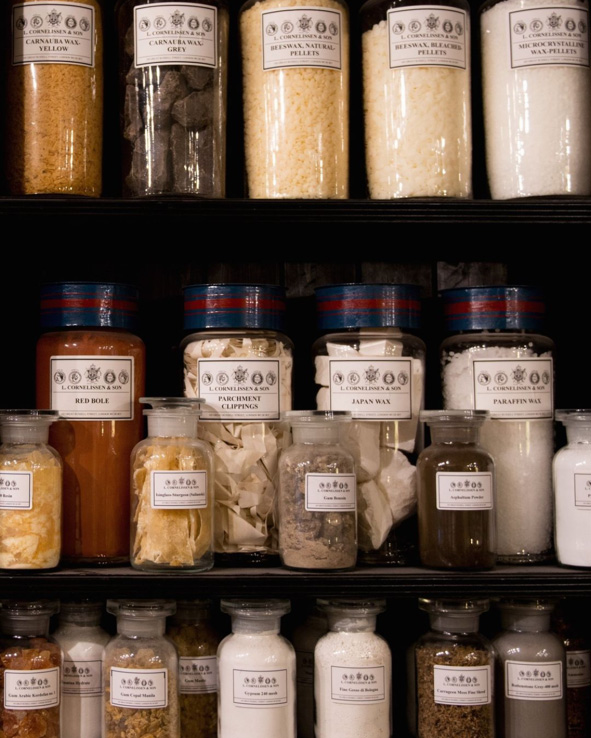
And mine is a recent store. It becomes even more baffling if you enter more venerable premises like Cornelissen & Sons in London or Sennelier in Paris. What on earth could “Parchment Clippings” be used for? As a surface for very stingy illustrators?? Is Button Shellac a lacquer made from buttons? They used to be made in mother-of-pearl once, perhaps then? (And there are stranger ingredients yet.) Is Rottenstone Grey a grey, rotten stone? Can stones even rot? Myrrh and Frankincense? Gosh, yes, one needs some sort of Higher Powers to help navigate all this! (In fact, I think I’ll need quite a few, so I might ask the Greek gods. In their awesome variety, there should be one for every situation, I’m hoping. And hoping, too, you won’t mind their divine interventions throughout the book; they’re such good company, I find.)

So, although it is about artists’ paints, you will come to understand that this is also a personal book, reflecting primarily my quest for a better appreciation of this material. It all began with a few visits I made to paintmakers, curious about how the stuff was made… No, let me be honest now. It all began when I came home from school and could detect, as soon as I opened the door, the smell of solvents. That could mean only one thing, that mum was home, at her easel, magnifying visor on her head, restoring this or that work for a private client. A rare treat as she was so often late from the Louvre or altogether absent for a few days’ work in a provincial museum. And so, for me, the smell of solvents is the smell of Joy… such is how our weird brains work! Writing this, I can virtually anticipate your cries from afar. I do know solvents are getting bad press these days (for good reasons), but, to me (sorry, can’t help, it’s Freudian apparently), no more than Proust could help himself swooning over a madeleine (and being neither the powerful writer he was nor as descriptive, you might be glad to hear I’ve shortened his paragraph-long experience to the one word), solvents are JOY!

What was I saying? Ah, yes (solvents do do weird things to your brain); it all began with a few visits I made to paintmakers, curious as to how the stuff was made. Sharing these experiences with my clients, I realised some were fascinated, as if missing that connection with their medium, too. Eventually, the technical sheets written for the store turned into a website, and I began writing a blog to recount these visits and share them more widely. Past the technical information provided, it also seemed necessary for the hard work of good brands to be understood. (Sure, their products are more expensive, but there are valid reasons behind that extra cost.) More than that, I treasure work well done, attention to detail, and passion for materials and having witnessed the enthusiasm, creativity and dedication most of them had, I wanted to pass it on. It might seem far-fetched to you that I also embarked on this adventure to do my bit re our planetary crisis, and yet I’ve come to believe, seeing everywhere an irreversible loss of Beauty and appreciation of ‘intelligent hands’ producing Quality, that these losses go hand in hand with our indifference for those who make and neglect of She-Who-Nourishes us. Cheap art materials… still use labour, still use raw materials. These give no pleasure and deliver poor results. Is there a point in producing bad colour pencils, for example? Except, possibly, to put off drawing an entire generation of kids?

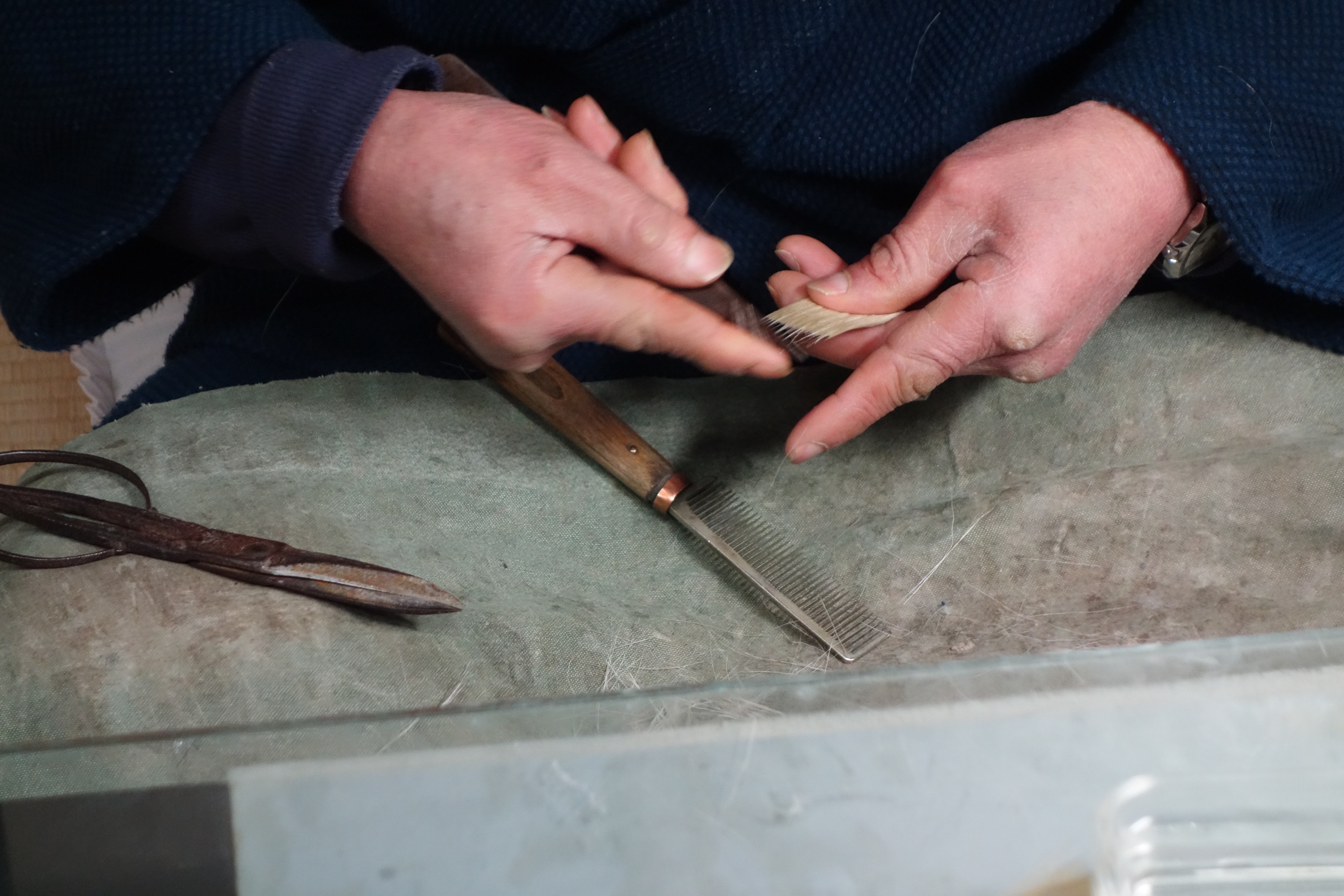
For reasons I can hardly explain, this interest in art materials—paint and its ingredients probably uppermost, let’s admit it—has never stopped growing in the last two decades. It has taken me all over the world into large factories and tiny artisans’ workshops and from quarries to willow-growing fields. I even signed up for an MA in Art and Materials Histories at City and Guilds of London Art School (the first of its kind)… at quite a venerable age! Focusing for that whole year on pigments, having access to specialised literature, museums, rich conversations with like-minded enthusiasts, plus hours of dusting and cleaning, in a cold basement, old jars filled with pigments from Cornelissen’s archive (the last Artists’ Colourman in the UK) have offered me many a reassessment of materials.
I certainly do not pretend to have acquired the intimate knowledge seasoned artists would have with their paints, nor that of paintmakers. This book is not even a History of… (although a bit) nor a How to… (although I share a few recipes.) In fact, these fields of expertise would each need the dedication of a lifetime but via sometimes odd, sometimes personal, and mostly unplanned circumstances, I have walked (and sometimes ploughed) that imaginary field from raw materials to finished artworks and beyond. My somewhat haphazard itinerary ends at the beginning of the production line, though, with my recent passion for pigments, and began somewhat at the end while watching artworks being restored by my mother. But, I suppose, even before she began that profession, my mother loved art, her father a collector and supporter of many Belgian artists of his day. Being surrounded by artworks in your home is perhaps enough to kindle an interest. Being forcefully dragged into yet another museum can produce some results, too (but, in my case, not enough to redirect my passion for literature to the visual arts.) However, after my parents’ separation, my mother went on to a love affair with a painter which lasted decades and family meals became full of talks of process, failures, philosophical questions about art, etc. (If you permanently have an artist at your dinner table, you’ll know what I mean.) Still, I hardly listened, remained with my nose in a book into tertiary studies, and even started an English bookshop with a friend in Paris.
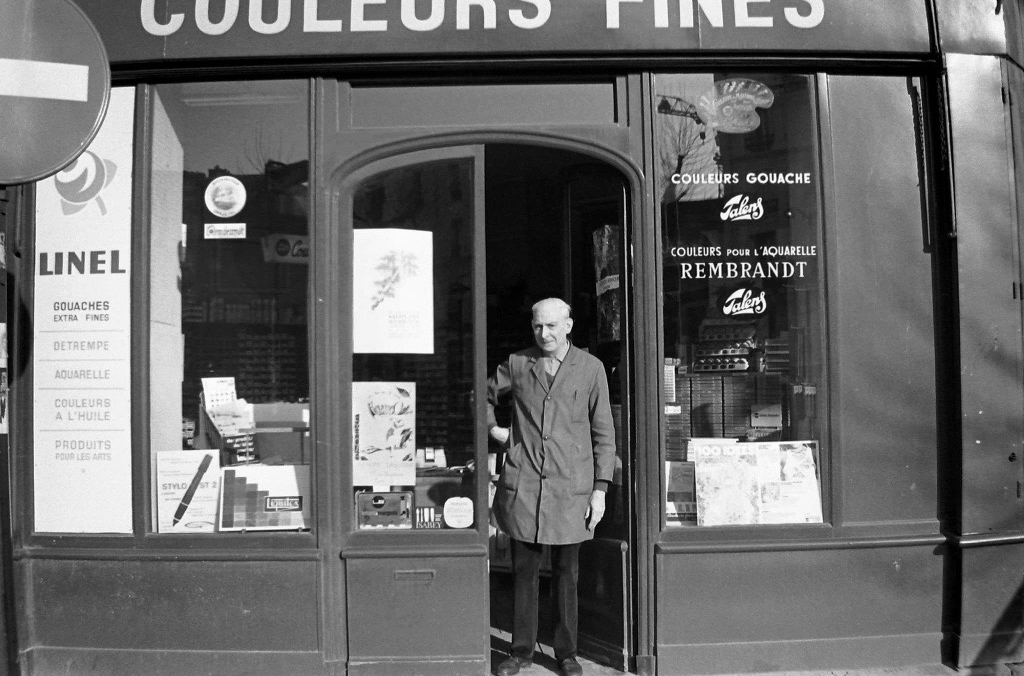
On the other hand, maybe I should thank my father, who landed the manager job at the American Art Centre in Paris. This gave us free tickets to the very sought-after FIAC opening night and a few other perks… in my case, a summer job looking after the gallery for one entire summer. I swear to Oizys, god of loneliness and misery, those were my life’s most dreary and sticky days. Paris was deserted, punters maybe no more than one a day, and while my friends were all enjoying waves and dunes, there I was, sweating and trapped between four walls covered with abstract paintings. Tough life! To pass the time, I taught myself calligraphy and danced in the vast space, but I also got to look, really look, at these paintings. So maybe one should be grateful now?
Years later, on the same totally erroneous assumption that Art had been inbred in me, I landed a job with an art expert specialising in… Belgian art. He was compiling a catalogue raisonné of Magritte’s works, and my two years with this eccentric character were not only interesting but great fun. They also gave me a much-needed initiation into art history, which served me well in landing another job as a graphic designer of book covers for a (then small) publishing house in the South of France. For quite some years, I was paid to browse art books! Russian painters for Russian novels. If nothing is suitable, move on to Scandinavian ones and Middle European ones… something (the light? the decor? the atmosphere?) would be closer to a Russian text than a painter from further afield. These years were bliss and opened my mind to many new and different art forms and expressions from those I had encountered in my French upbringing. After that? A few more years as a publisher and then a big hop to Byron Bay, Australia, running a community gallery that also provided picture framing. The gallery sadly expired after five years of wonderful shows to leave space for art classes and art materials demos, but we still framed there. Mostly, art supplies had taken over. Not the entire store, but my mind, as you can understand from above.
The field I will try to walk with you here is vast, and although—both as a professional and non-professional—I’ve enthusiastically studied some of it, again, I wouldn’t dare to call myself an expert in any of the above. Not even entirely sure I deserve to be called a colourwoman! (At some stage in the writing of this book, I truly doubted I was even allowed to speak for these many pigment voices and narratives. Then, one day, I finally realised and accepted that everyone is legitimate when sewing their own quilt. Made up from all those bits and pieces of one’s (life) fabrics, it might even end up, with perseverance, as a fully-fledged ‘work’. Maybe not a work of art, maybe not perfect, maybe not as emotionally potent to others as it is to me, the maker, but a sum of its parts.) I am humbly submitting this patchwork here to you…
When I first came across this line in Tim Ingold’s Materials against Materiality, “The properties of materials are not attributes but histories” it really resonated in me. One thing I knew I was good at, and reasonably confident I could deliver, was storytelling. So, for the purpose of this book, I gave myself the alternative title of Narrator of the Treasures I have found these complex paint ingredients to be; of the stories I discovered when peering through the small aperture at the end of the tube.)
Soon, I shall entertain you with some rich tales in which, together with beliefs, gods, camphor, coffee, cannabis and cardamon; furs and frankincense; spices, silks, slaves and silver; plagues, pearls, porcelain and poetry, these very pigments, resins, waxes, oils, tars and gums climbed mountains, crossed continents and oceans to end up in the library of some wealthy connoisseur in Damascus or Kyoto—resting perhaps between the pages of a Holy book or a treatise on love-making—while others made it to a king’s castle in Aragon or a merchant’s wall in Antwerp blended into the composition of a stern portrait or a table laden with a profusion of flowers and fruits.
Perhaps that’s why the book’s a bit messy, but I make no apologies for that. Partly because the whole thing is a little bit magical, and you cannot force these powerful ones, with so much History and Story, into a linear discourse without some flavour being lost along the way. Partly because paint is messy (and I’m always a bit wary of artists’ studios which are too tidy). Finally, if I warn you thus, I’m more free to tell the tales… the way I choose.

Also, although I proceeded like a Sherlock on these colourful trails, I make no promise of having found the ultimate one and only acceptable version for their characteristics or meanderings in time and place. I tried my best, yet some pigments were lost, for example, then found again under another name or two (or twenty!) At the same time, other tales are so hilariously convoluted as to be impossible to believe. I will tell them anyway, but the only promise I will be held accountable for is that a colourful journey it will be!
If you care to, follow me… (map of the journey)
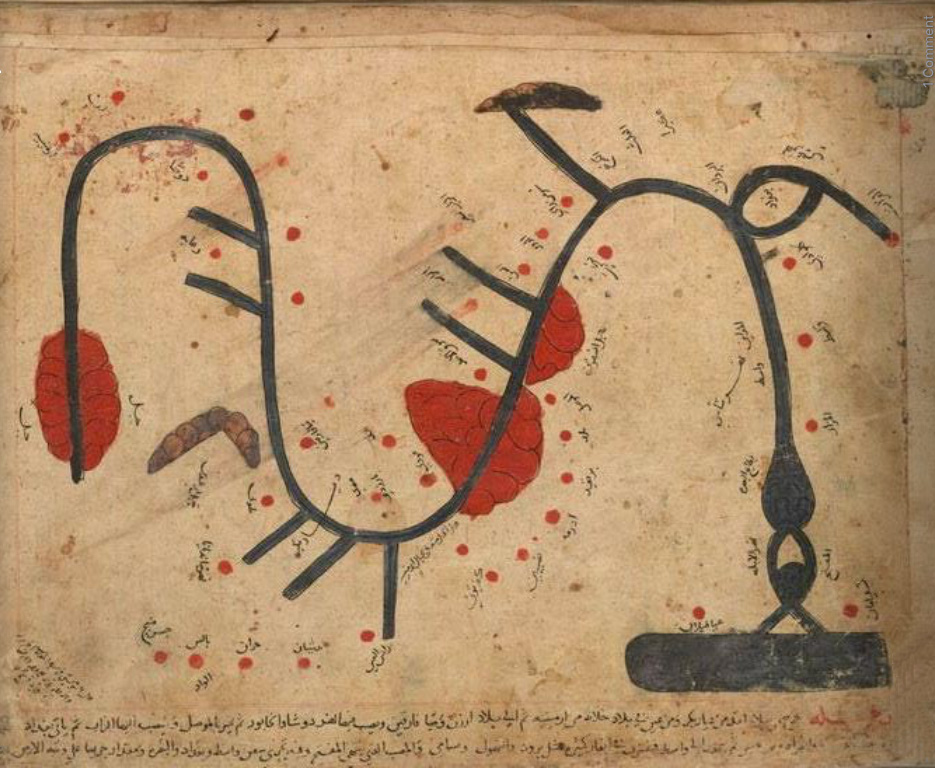
(Alternatively, you could choose one of these maps for our journey… there are so many delightful ones! But at the end of the day, as Herman Melville once aptly suggested: “It’s not down on any map; true places never are.”)

Jump to the next section of the book by clicking here
Alternatively click on the Table of Contents to browse the sections.
You can also subscribe to my blog at the bottom of this page,
and you’ll receive Hues in Tubes in your inbox… as it gets published!
Discover more from in bed with mona lisa
Subscribe to get the latest posts sent to your email.
 in bed with mona lisa
I loved this Sabine – and look forward to more. Many thanks …Sarah
Thanks Sarah… am really enjoying ‘publishing’ my book in this manner!
Totally captivated me!
My god, I love this Sabine! Paint + France are my two favourite things in the world, so that simple equation = Heaven. A joy to enjoy after the stress of the last few days. Thank you, (and I hope you are ok) xxx
I sadly do not know who is behind this mysterious address but Thank you and I hope to take you to Heaven again!
That was me Gatya. No idea how and when I acquired that address, news to me!
HOw very odd! but lovely to hear from you…
Can’t wait to read more!