WHICH?
Pigment Characteristics
In my hippy-happy store in Byron Bay, Australia, I regularly get a request for “natural” pigments, to which I sometimes reply cheekily: do you mean natural as in made from arsenic? mercury? copper? lead? or perhaps sulphur? These have all been used to make pigments and are found naturally on the planet! But that’s generally not what the clients have in mind… So that nuance of ‘natural’ excluded, I still feel the need to stress that, as far as I know anyway, no sample brought back from the moon was ever turned into a pigment to paint with so that we can safely pronounce all pigments to be made with materials found on our good old planet, including the ones 100% born in a lab…. Confusing? Onwards, then, to the second pair in all pigment classifications: natural vs synthetic. Opposed thus, the terms should be clear-cut, natural as in found in nature and synthetic as in artificial, man-made. But, as ever, it’s sometimes a bit weird on which side of the fence some pigments fall—still, the obvious ones to start with.

Organic & Natural
So, organic pigments (from something alive at some stage) are often also “natural” in the most obvious way: plants, animals, etc. From indigo leaves and buckthorn berries to the roots of the madder, the bug in the carmine or the crimson, the crushed shells, the charred peach stones or vine twigs, they are all easily understood as such.

Inorganic & Natural
Likewise, for centuries, most inorganic pigments were “natural”, too, which is not to say it didn’t take intensive labour to mine rocks, crystals, ochres, and ores and turn them into something usable, but they were not artificially manufactured. Even burning an ochre to change its colour does not change its classification. Initially, it was found in nature.
Organic & Synthetic
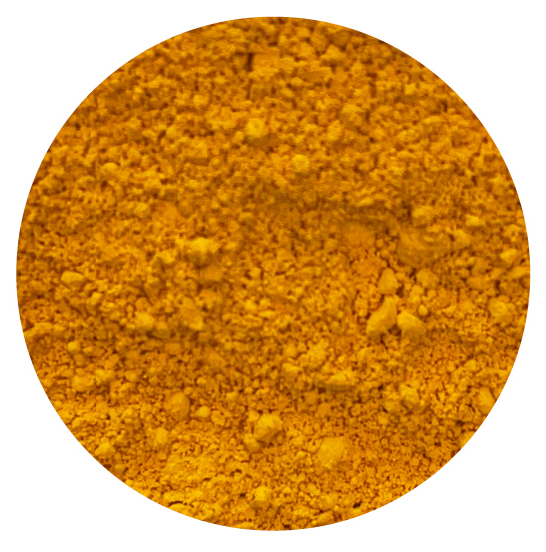
As we just saw, under the organic label, we must include our fossil fuel-based friends and all of the pigments produced from them that are manufactured, i.e. synthetic. The so-called Modern pigments, made from complex hydrocarbons, have their roots in the chemistry revolution, which goes back a couple of centuries now, yet widespread production of them often didn’t really begin until after the Second World War. Although most of these have only been commercialised for a few decades, organic synthetic pigments have more or less taken over today’s pigment market for obvious reasons. They are available in almost any shade imaginable and offer remarkable, unprecedented lightfastness. At least we so believed… until very recently! (Sorry for the spoiler alert, and more about that later.1)

Inorganic & Synthetic
Amazingly early on, we understood how to manufacture some inorganic pigments synthetically. The oldest one, Egyptian Blue or frit, might have been discovered even earlier in Mesopotamia, but there is no doubt that the Egyptians’ ceramic industry knew precisely how to mass-produce this subtle blue/green crystalline pigment at the time of the construction of the Saqqara step pyramid around 4700 years ago. They were also aware of its unique nature, as their name for it reflected: hsbd iryt, aka artificial lapis lazuli.
Let’s take a little detour to discover better Egyptian Blue (it’s got a lovely story to tell.) Used and produced all over the Mediterranean by the Romans, nevertheless—and probably in the chaos of the end of the Empire—by and by, Egyptian Blue’s recipe was forgotten, with only rare occurrences of it ever detected again later in a handful of paintings here or there. (Possibly only because an old pigment stash was found and used.2) The recipe is complex. It implies chemical knowledge and firing mastery, too, as the kiln in which the blended ingredients are fused—1 part lime (calcium oxide), one part copper oxide and 4 four parts quartz (silica)—has to be between 800 to 900 degrees celsius precisely. More lime, more heat, and you get… green frit! (See above.)

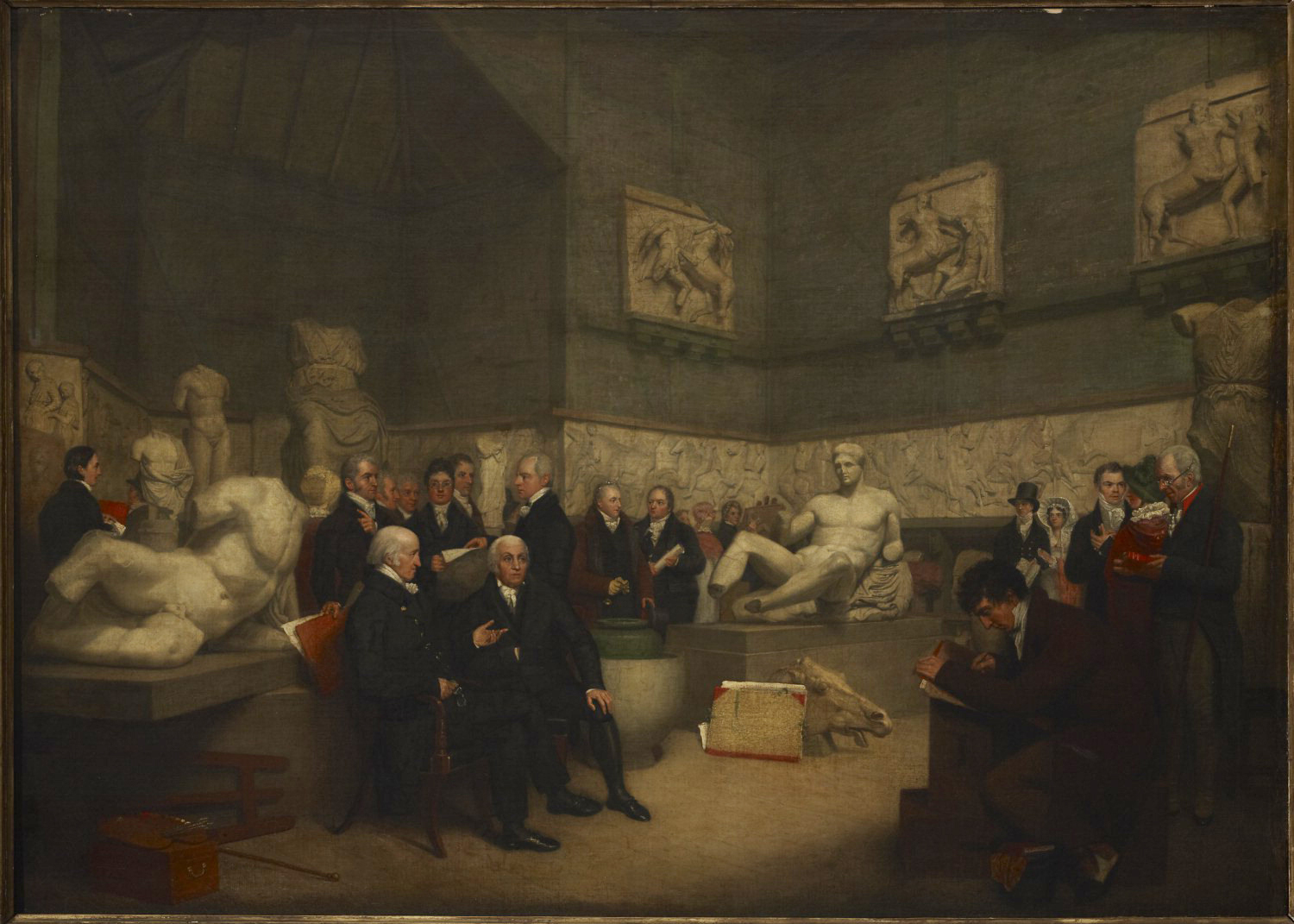
It turns out that the brittle blue material, which could then be ground to a soft, tender blue fine pigment, had another trick up its sleeve (or, more precisely, under its belt!). One that would take many more centuries for us to ‘see’, thanks to technology, as it absorbs visible radiation but re-emits infrared radiation. It also had very important information to deliver via a well-suited lady for the job, Iris, messenger of the gods and goddess of the rainbow (she also gave her name to the apple of our eye, the iris and iridescence!) In truth, Giovanni Verri and his team of researchers at the British Museum helped too, as they discovered in 2006 that Egyptian Blue has an exceptionally strong luminescence and emits a glow under fluorescent light.3 Not too clear a message from the gods, perhaps, but a sure signal of infrared radiation, similar to the one which communicates between our televisions and our remotes, our car keys and locks, etc. Our eyes can’t see this emission, of course, but it can be recorded with a camera equipped with modified filters. And so? With this technique, even one grain of the luminescent pigment can be detected and prove the presence of paint and patterns on a surface: stone, fresco, or painting. So that it was Iris’ belt—a sculpture that had once been part of the so-called Elgin Marbles from the top of the Acropolis—which gave a definitive clue curators were desperate for… indeed, the Parthenon was once painted!

Even if Rodin, like so many others, felt “in his heart” that no colour was ever used, why were we, even so recently, still thinking these particular statues were left in their pristine splendour? Especially since we could see so many other bits of the Parthenon that, indeed, were painted. (We have known for a long time that buildings and statues in Antiquity were covered in high chroma colours, which, to be fair, is hard for us to imagine nowadays.) Well, perhaps its Pliny’s fault as he mentionned the frieze was made from the purest white marble from Paros and, why indeed bother if you’re going to paint the whole thing in the end? Yet could it be that the white statues we now know are an extreme case of XIXth century white supremacy or of devotion to marble in its raw state as Colour “imparts an air of life which destroys [sculpture’s] ideality” or… Clio, muse of History and Creativity, goddess of Memory, please help me as I really cannot comprehend what else could have entered Lord Duveen’s mind when, during the building of the Duveen Gallery at the British Museum, which was to house the Elgin marbles (yes he was paying for it… but), he brought in teams of workmen armed with the strongest abrasive to scrape off the surfaces of the statues. And look, even then, in 1930, he knew that was not 100% ‘archeologically correct’ as all this ‘restoration’ was done behind locked doors.
Not all synthetic inorganics have such a story to tell, but the manufacture of the highly toxic lead, mercury or arsenic-laden Flake White, Antimony Yellow, Red Lead and Vermillion, for example, is quite astonishing too. While Manganeses, Cadmiums or Cobalts might be more discreet (yet still not that easy to produce or friendly either), the bling ones we mentioned earlier, attached to ground glass, mica and other metals, creating the pearly iridescent and interference metallic hues are quite a technical prowess, too. All of these are, obviously, synthetic and inorganic.
Strangely enough though, and despite knowing how to produce synthetic iron oxides for centuries, we did not really add any to the palette until the Mars colours turned up at the end of the 19th century. Purer and more opaque than natural ochres, they have their raison d’être for artists and, correctly labelled, tell you of their synthetic provenance. You might have been puzzled not to find any Red Ochre on the paint shelves, and often no Yellow Ochre in a range either, and that’s because natural ochres are used less and less (too many variations!) In their stead, Red and Yellow Oxide, and declensions thereof, such as transparent oxides, are easily found. However, those are letting you know you are buying a synthetic red ochre. This was not always the case. Until recently, natural ochres were often called red/yellow/orange oxide, too, but it seems that now, on the whole, you can trust the labelling to reflect this distinction.
PS May I add that what is happening on the paint market today with some Earth colours is more troubling? Under the label of time-trusted pigments such as Yellow Ochre, you might now find Mars Yellow or discover Raw Umber has become a weird mix of Phthalo/Chromium Oxide Green plus other synthetic/natural iron oxides. Meanwhile, your Burnt Sienna might have had some Titanium or Zinc White added to it or even have no natural Earth pigment left in its composition but Benzimidazolone Brown, Nickel Azo and Isodolinone Yellow replacing your familiar tone. I know the original sources of some of our beloved Earth pigments are running out. I also understand that, wherever from, these will naturally vary in hue and that that’s a paintmakers nightmare, but, even if the colour out of the tube is a good match for your eyes at first, these substitutes do not, cannot, behave in your mixes like the ones they imitate. These lures are not OK. Even if dutifully labelled on the back of the tube in jargon language PY139 + PBk11 + PR101, for example, you should be able to trust without an extensive investigation that your Burnt Umber is… Burnt Umber! Riding on the back of a bestselling name is not fair game; it is confusing and ultimately detrimental to the industry. Just be brave paintmakers out there, give these new ones an interesting name and… we might love it!4
Jump to the next section of the book by clicking here
Alternatively click on the Table of Contents to browse the sections.
You can also subscribe to my blog at the bottom of this page,
and you’ll receive Hues in Tubes in your inbox… as it gets published!
Additional information and references
- Check the story of Hansa Yellow, in the Some pigments are lightfast, some are fugitive section. ↩︎
- Spanish Foundation for Science and Technology 2010. Egyptian blue found in Romanesque altarpiece. [Online]. [Accessed 30 January 2025]. Available at: https://phys.org/news/2010-05-egyptian-blue-romanesque-altarpiece.html ↩︎
- [Online]. [Accessed 30 January 2025]. Available at: https://harvardartmuseums.org/article/exciting-pigments ↩︎
- Sorry, Wrong Umber… is a brilliant article (as always) by Sarah Sands in Just Paint, the Golden Artist Color’s newsletter. Further updates on this issue are also available. [Online]. [Accessed 30 January 2025]. Available at: https://justpaint.org/?s=wrong+umb ↩︎
Discover more from in bed with mona lisa
Subscribe to get the latest posts sent to your email.
 in bed with mona lisa
this is FACSINATING
Thanks Maddie… I find so myself (as you well know!)