WHICH?
Pigment Characteristics
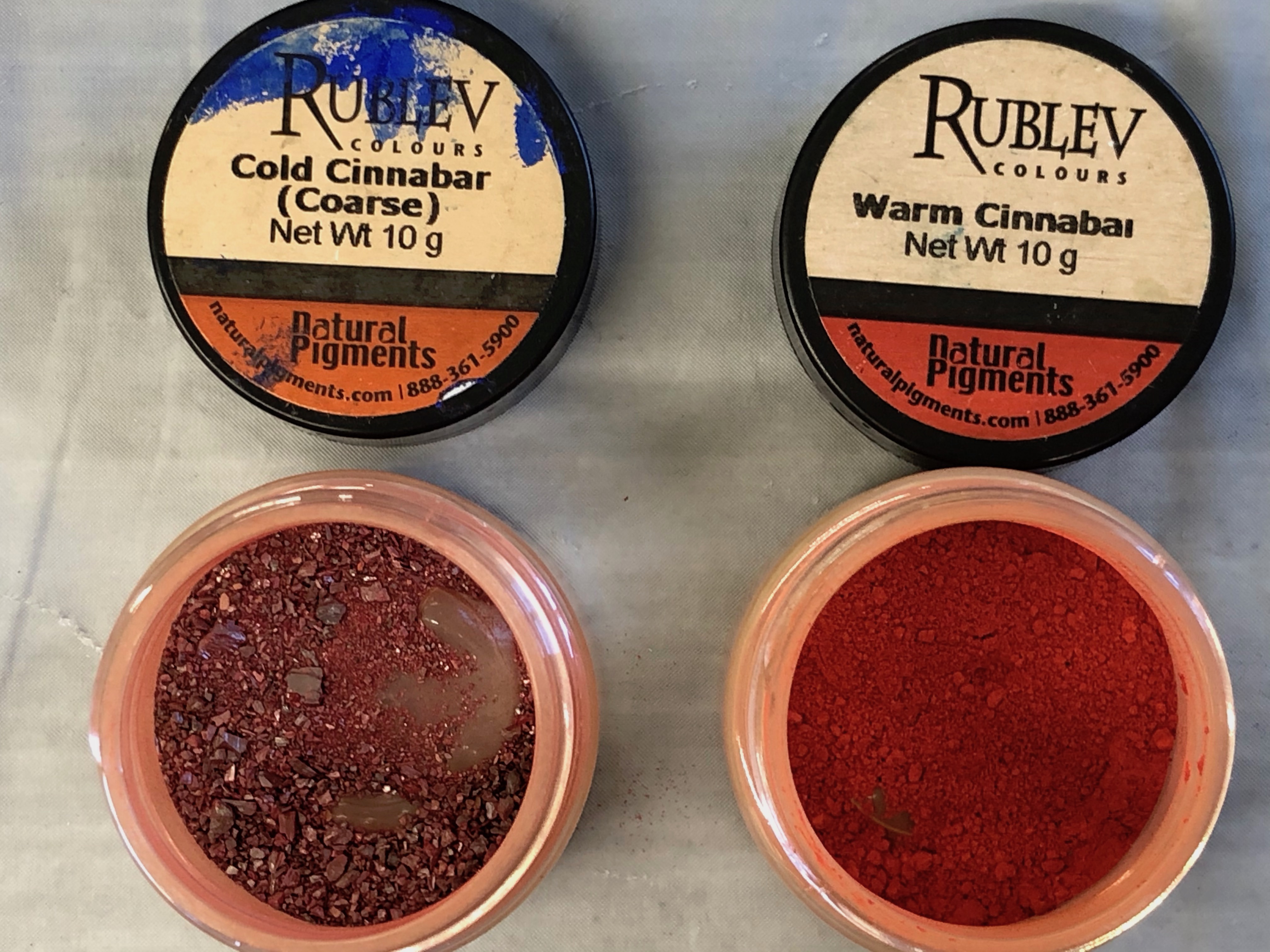
Despite hot chilli, pimiento, sharing pigment’s Latin root, in my opinion, all pigments are pretty cool. I know not of a freezing process, although pigments are often rid of impurities in successive cold-water baths, yet cold or cool, in reality, they will never be… All these ‘temperature’ terms—even a ‘burnt’ one doesn’t count!—do not concern pigment one bit. Just as we are attracted to Colour (chromophilia) or staved off by it (chromophobia), thermic attributes are only our feelings talking, which we then mistakenly extend to pigment and paint rather than understanding them as subjective decisions emanating from our culture and personal taste.
And so, despite books and teachers sending everyone on a wild goose chase for a cool or warm red, yellow and (hardest of all to choose) blue, there isn’t a cool or a warm pigment to be had. Well, not when we are describing the true nature of these paint particles, which have no more temperature than they have colour… except for a few silly ones called thermochromics. These are made of materials, such as liquid crystals, which will change colour when brought close to a warm source (our hands or bodies will do), then retract back to their original ‘cool’ hue. What that warm source does is modify the spacing between the crystals, which modifies the interference and the colour of the reflected light.1 You could paint with them, of course, but if the museum guard doesn’t let anyone near your painting, let alone touch it like visitors used to be able to, your expensive trick might go somewhat unnoticed! (Also, these paints have a one-year shelf life, so you’d better sell your artwork quick and then run fast.)

Jump to the next section of the book by clicking here
Alternatively click on the Table of Contents to browse the sections.
You can also subscribe to my blog at the bottom of this page,
and you’ll receive Hues in Tubes in your inbox… as it gets published!
Additional information and references
- Want to know more about thermocromic paints? Go to: https://www.explainthatstuff.com/thermochromic-materials.html ↩︎
Discover more from in bed with mona lisa
Subscribe to get the latest posts sent to your email.
 in bed with mona lisa
I just read a biography of Wm Blake. I don’t understand the difference between his use of tempera and watercolor…what I understand is that the binder for watercolor is gum arabic and the binder for tempera would be an animal glue…I don’t think he used egg as a binder. I know he was experimental and tried many techniques. Have you written about this? I also know he wanted to return to fresco but I think that would require a plaster as binder..
Teri
Teri Power Woodsia Studio @ferninwood http://www.teripower.com
>
HI Teri and thanks for your question… I know Blake’s work well, not so much his techniques, but I can give you my considered opinion (for what it’s worth!) Tempera, traditionally, is made with egg (usually only the yolk but sometimes whole), sometimes with some oil added. If you use animal glue as a binder, it would result in another type of paint and be referred to by a different name. Rabbit skin glue has been used for centuries to make gesso, but also distemper paint (we would call it today poster paint). Some hides and other animal glues are traditionally used to make ink in China and Japan and Blake could certainly have made his own inks and paints with all of the above, but I think calling it tempera would be a misnomer. This is the best I can come up with!! (and, indeed, some artists have been quite interested in reinventing the wheel and trying out some new combos of binders/pigments/resins, etc.
Have you read the binder section of the book? It goes into a bit more detail about all this…
Cheers
Sabine