WHYEVER?
Hues in Tubes… and how they made a name for themselves
Some paints are named after… their content
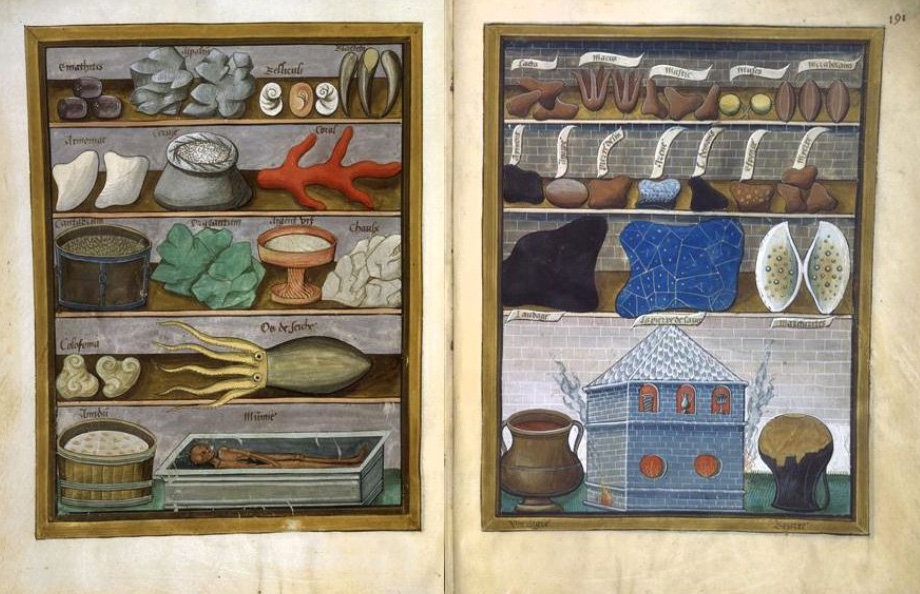
We seem to have a human need or, at any rate, have developed an urge to organise ‘things’ to understand them better. Clear elemental categories that tried to explain and somehow contain the complex nature of Matter into simpler substances can be found as far back as the Babylonian, Egyptian, Persian, Tibetan, Indian and Greek civilisations. These vary widely, as some are based on philosophy, cosmology, or even mythology. In Europe, we had, on the whole, accepted the Greek model of four basic elements (earth, water, fire and air) and stuck to it until the Scientific Revolution began experimental verification. Today, and even if the different states of matter (solid, liquid, gaseous and plasmatic) might roughly correspond to the classical view… we have organised the 118 chemical elements (and counting!) on a pretty Periodic Table. These have nothing in common with the Classical elements, each of them pure substances consisting of atoms with the same numbers of protons in their atomic nuclei—a fact we could not have understood or verified back then.
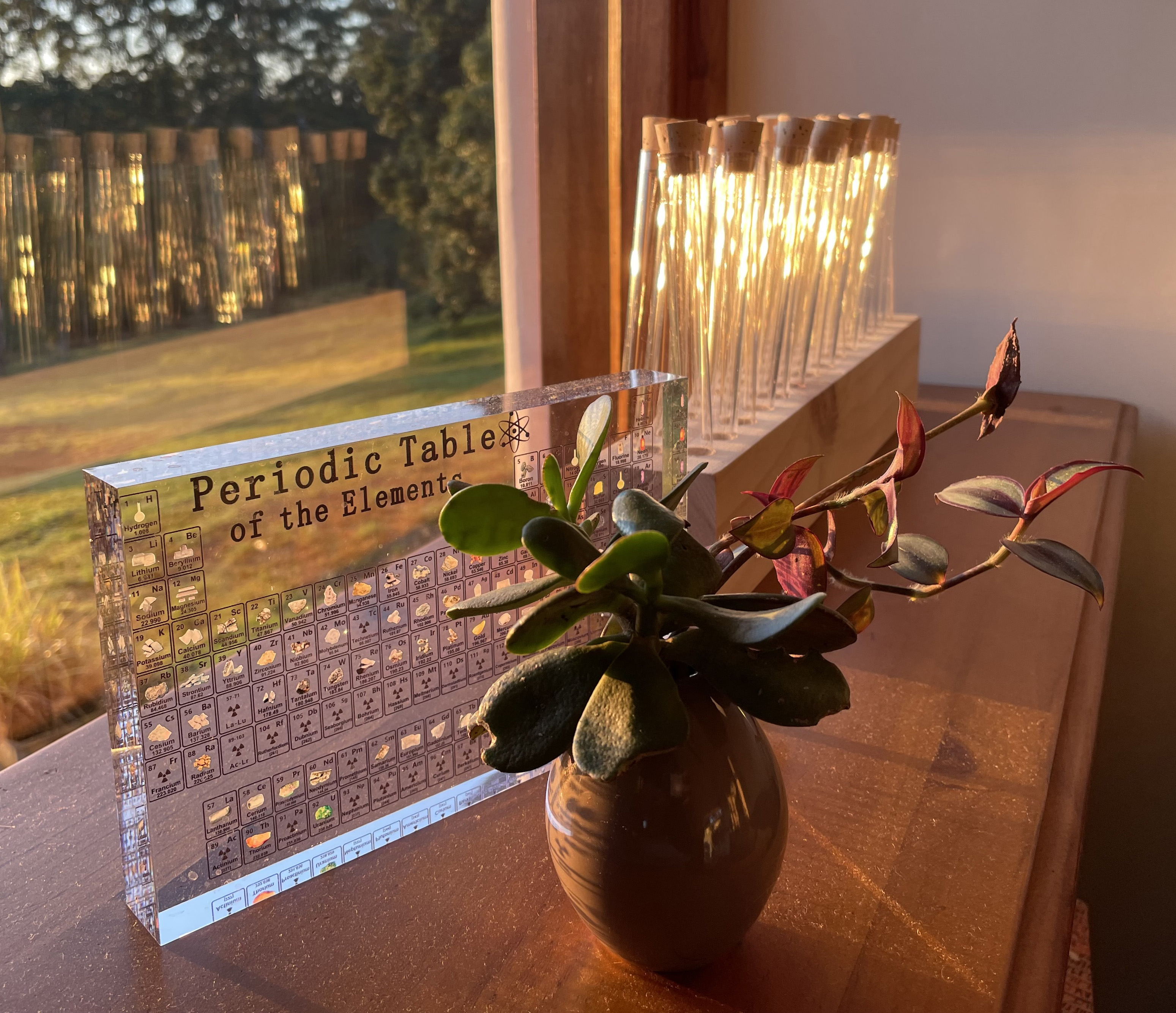
I became pretty obsessed with it all and even bought myself a Periodic Table of the Elements, which encloses a tiny amount of each element in question (save for highly dangerous ones.)
At first, I didn’t appreciate the pure chemistry of these colourful particles, having never looked at them from that perspective or had any ability to do so. And yet, now that their composition has become more familiar to me, the Periodic Table of Elements has turned into a virtual walk in Pigment Park! Shall I take you on a bit of a tour?
Our newly born star is YInMn Blue, the only pigment name made from an acronym of three acronyms, after its chemical makeup of yttrium (Y), indium (In), and manganese (Mn).1 (Amazingly, nobody seems to have had a problem adopting and remembering that name… although I’m not sure their spelling would always be correct!) But before it, we have named many other pigments from their central element. There are whole families of Manganese (Mn), Lead (Pb), Titanium (Ti), Zinc (Zn), Cadmium (Cd), Cobalt (Co), Iron (Fe) or Chrome (Cr) pigments; some well known shiny ones like Gold (Au), Nickel (Ni), Copper (Cu), Silver (Ag) or Tin (Sn); while many other pigments from the table might be less obvious but are visible on our tubes: Barium (Ba) Yellow, Antimony (Sb) Vermillion and Lead Antimony (aka Naples Yellow), Bismuth (Bi) Vanadate Yellow, Strontium (Sr) Yellow, Molybdate (Mo) Orange and Red (molybdenum) and we shouldn’t forget our ever so useful Chalk (Ca) nor Carbon (C). On the other hand, sulphur (S), mercury (Hg) and arsenic (As), often present in historical pigments, have miraculously vanished from their names, but is it a surprise that these poisonous ones did not reveal their sulphurous identities?
Most of the above pigments, now familiar to us, are inorganic ones derived from natural minerals. But, if you remember the distinction I made between Modern and Postmodern pigments, the most recent ones are, in fact, synthetic organic pigments made up of carbon rings and chains.2 These, nearly half of the tubes on shelves today, sound more like they belong to Frankenstein’s lab than in an art store in which nobody’s got the faintest idea how even to pronounce their names: Phthalocyanine, Dioxazine, Naphthol, Indanthrone, Pyrrole, Anthraquinone… I could go on, and it could get worse! (At Art Guerra’s store in New York, where the list of pigments is the longest of anywhere I’ve ever seen3, some answer to the charming names of Chromophal Scarlet, Azoic Plum Violet, Crap Green, Irgazin 2GLT or even DNA Orange. It takes the fun Cobalt Tutti Frutti, the cute Cobalt Raspberry, the fastidious Caprice Cobalt Violet or languid Dalamar not to run away in terror!)
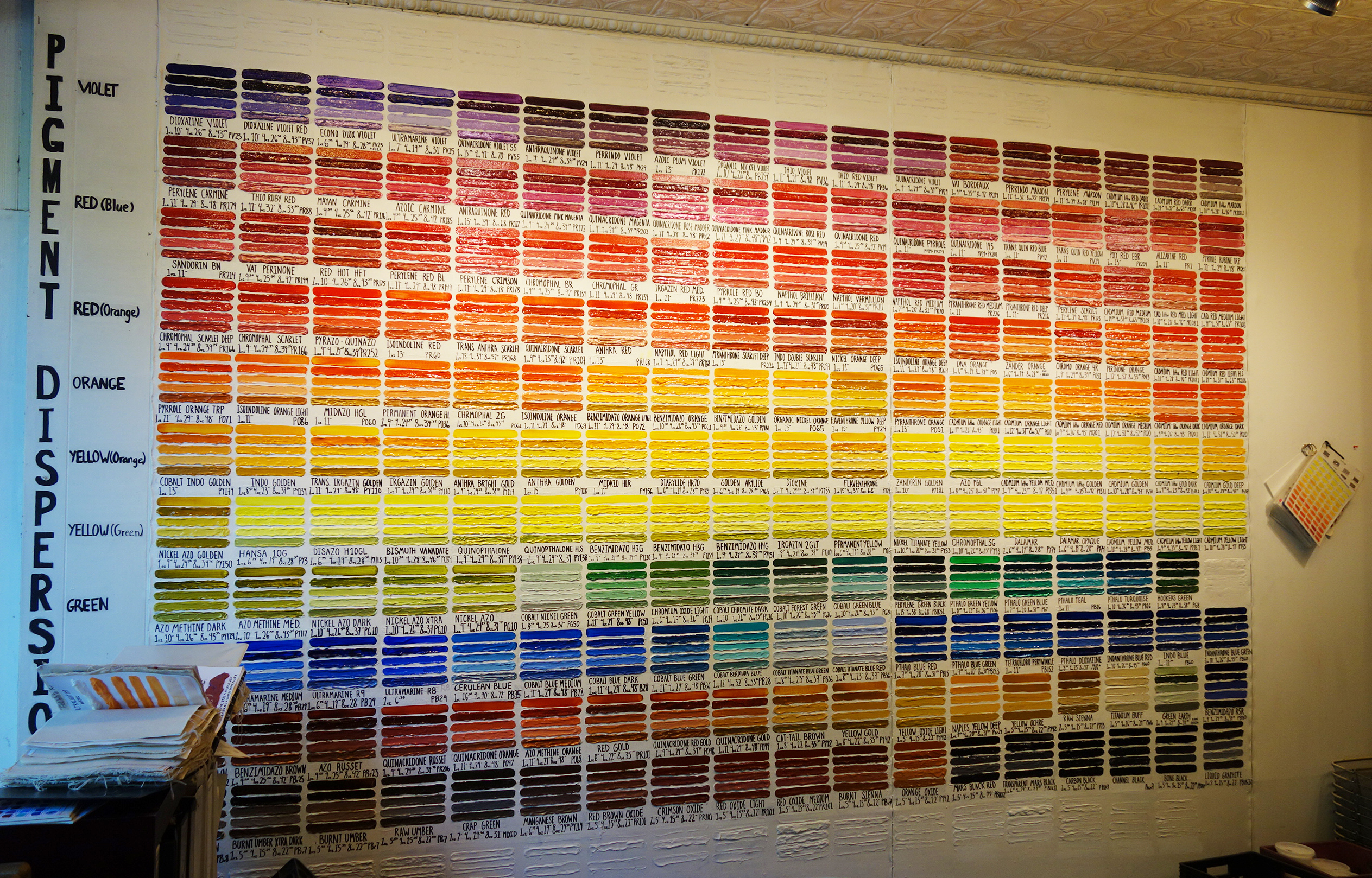
The incredible sample wall of Pigment Dispersions on offer at Art Guerra’s store in New York. Photo © Sabine Amoore Pinon
One gets used to them soon enough, though, and even if mine is not the received pronunciation, I must admit I do enjoy saying Quinacridone while, apparently, and according to the paintmaker Golden, we should love saying Benzimidazolone—the pigment replacing Hansa Yellow found recently not to always be quite as lightfast as previously thought. When we received the first tubes in the shop, and since we didn’t have a clue, we decided to give it an Italian twist. Try it as if you were shouting an order of pizza… you’ll see… it sounds delicious! Ben… zi… mi… daaa… zoooolooooone!
Hues in Tubes,
everything you’ve always wanted to know about PAINT
without daring to ask the shop assistant
is now available in its entirety on this website…
Jump to the next section of the book by clicking here
If you would like to begin the book at the beginning, please click here
otherwise, to browse the sections, go to the Table of Contents
Additional information and references
- YInMn Blue, our latest synthetic baby, soon appeared in Derivan’s Matisse range and, more recently, in several others. ↩︎
- I’ve grouped them here because, as far as naming is concerned, they both use the main component of the pigment as their label. ↩︎
- They offer pigments as ready-to-use dispersions, as well as all the binders you need to make your own paint and a few crazy blings and additives! It’s a very fun shop… only in New York! ↩︎
Discover more from in bed with mona lisa
Subscribe to get the latest posts sent to your email.


One Comment Add yours