WHYEVER?
Hues in Tubes… and how they made a name for themselves
Some paints are named after… their content
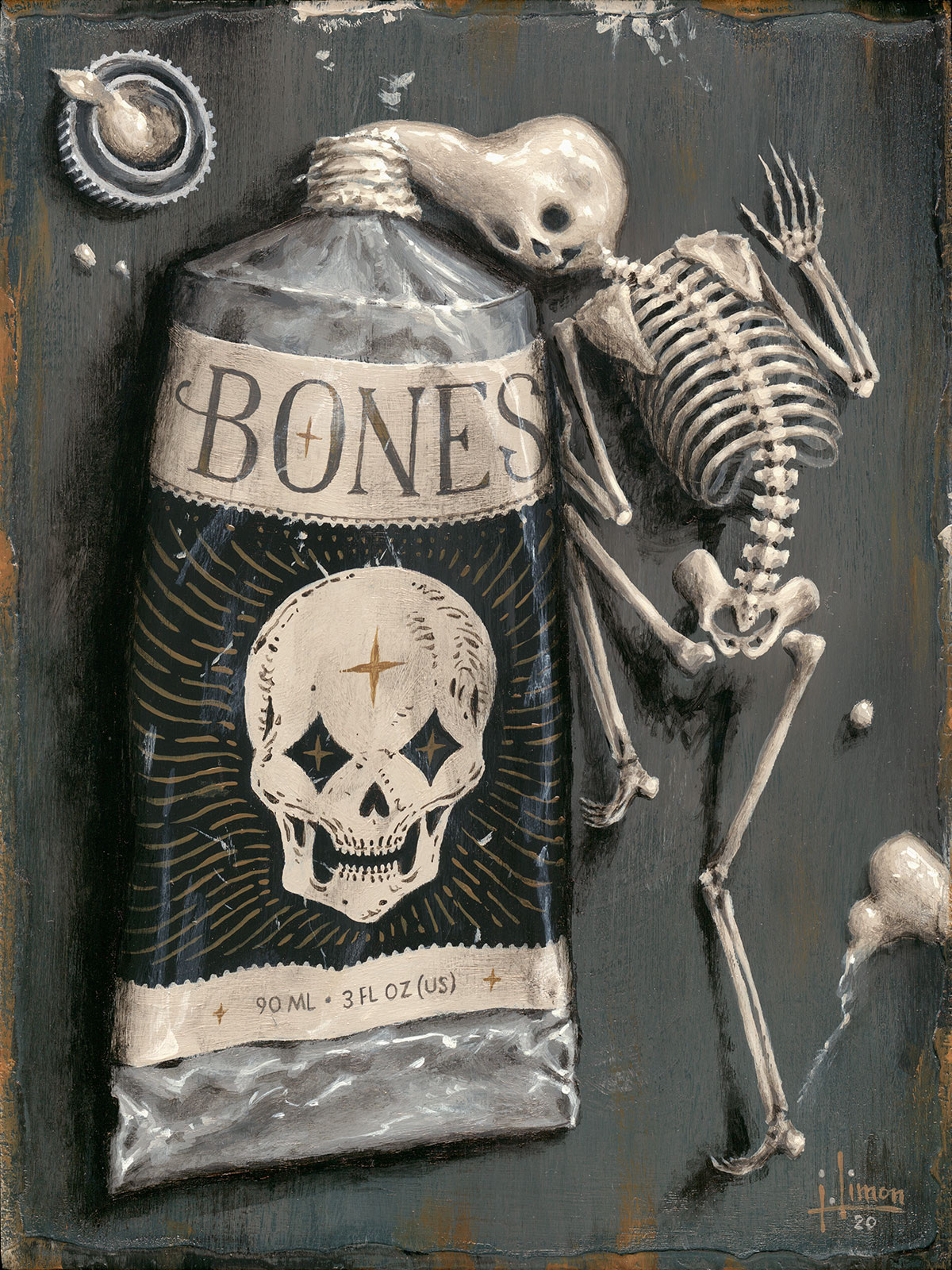
There is not much chance of finding, nowadays, a tube of Mummy Brown or Caput Mortuum with a warning which would go something like: “This tube contains traces of mummified bodies or parts of chopped-off heads.” Conforms to ASTM, CI… Not/Applicable! Yet those are the pigments I get most queries about, and, of course, painters did paint with crushed mummies! Apparently, “the most fleshy are the best parts,” while the name Caput Mortuum (variously spelt Caput Mortum or Caput Mortem) does literally mean “dead head” or “worthless remains.”
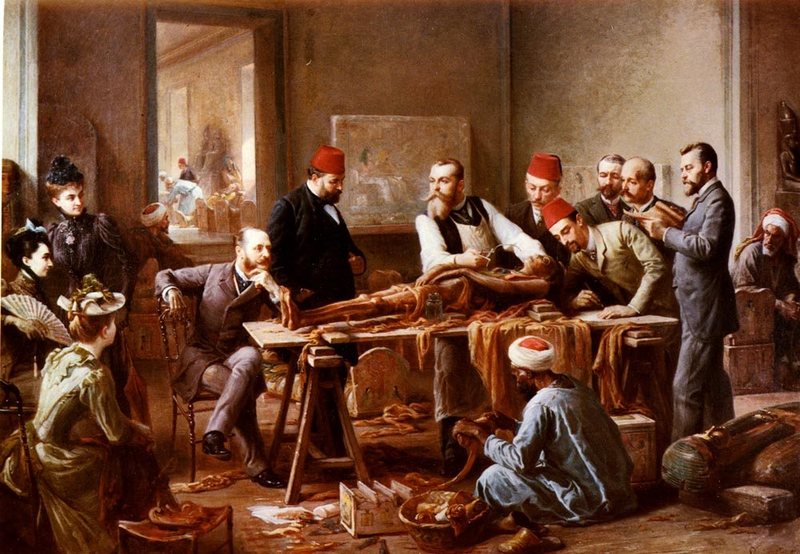
Genuine Mummy Brown was discontinued in the 19th century, supposedly “when artists became aware of its ingredients.” At least that’s what you read here and there, but trust me, the content of a paint has never stopped artists from using it if it could prove of benefit to their practice. There was even an art supply store in Paris called A la Momie! (If I was truly cynical, I might add that maybe they stopped using it when they realised that what they really liked about it was the Bitumen in which the shrouds were soaked to preserve the bodies.) As for desecrating a body? Well, that didn’t seem to worry them much, either. The prudish Victorians actually held ‘Mummy Parties’ during which, to everyone’s delight, they would unravel some-body’s remains in pleasant company… so you decide on that one.
If that some-body is a king, does it make a difference? Hear this French revolutionary tale… Kings of France were traditionally buried in the Royal Basilica of Saint-Denis, but their hearts knew a different destiny and were usually offered to a religious congregation that would embalm and keep them in sumptuous reliquaries. 1792, three years after the revolution, France is in a dire financial state, so much so that the government orders the Treasury to melt the reliquaries, held in the church of Saint-Paul-Saint-Louis in Paris, of both Louis XIII and Louis XIV’s hearts. An architect is given the task but, aware of the prevalent difficulties artists face in acquiring pigments (especially mummy brown), he offers a couple of friends the royal remains. Left to macerate in alcohol, then milled into oil, this delicious reddish-brown “mummy juice” has been identified in a couple of their paintings: Martin Drölling’s Intérieur de Cuisine, and Alexandre Pau de Saint-Martin’s Vue de Caen. (Martin Drölling apparently enjoyed the regal nature of the pigment, as another of his paintings, Le Colporteur, allegedly used the hearts of Louis XV’s daughter-in-law and Anne d’Autriche!)1

Caput Mortuum is also a compelling, if lesser-known tale. The name was and is still often used for Mummy Brown, but that’s a misnomer. (Caput Mortuum also sometimes refers to a naturally occurring or heat-treated purple variety of hematite iron oxide found in Roman, Byzantine and post-Byzantine art very similar in colour to the synthetic one, so that usage is confusing too.) Also known as Cardinal Purple—as it was a popular colour for painting the vestments of religious figures and important personages (think art patrons)—this soft mauve-brown synthetic pigment saw the light of day as a byproduct of sulphuric acid manufacturing during the 17th and 18th centuries and is still found in many ranges. Oh, ok, so no body parts then? No, none at all, and to add insult to injury, the Latin name is a lure, a pure embellishment of the 18th century, borrowed from alchemy in which caput mortuum signifies a useless substance left over from a chemical operation such as sublimation or oxidisation. Alchemists represented this “epitome of decline and decay” with a stylised human skull, a literal death’s head. So sorry to disappoint, but Caput Mortuum, never made from crushed skulls, is a banal synthetic iron oxide with a fancy name. It rightfully belongs to the club of those paints named after the process that produced them, even if it is just that little less exciting…

PS: Should I state the obvious and clarify that all other paints on shelves bearing the name Flesh are talking about skin tones and not content? Probably no need to, but in the prevalent context in which, over the justified concerns of some, “Flesh”—the ‘white’ variety obviously—is being renamed Naples Orange, Light Apricot, Dusty Pink (a fitting reminder of our dust to dust human journey?) or even turned into a crustacean soup, i.e. Bisque, just thought I’d give it a mention before these mixes are altogether thrown in the too-hard basket by paintmakers sometime soon!
Additional information & references
- Want to know more about this crazy story (apologies but they’re in French.) Autopsie des cœurs célèbres, par Philippe Charlier et David Alliot, éditions Tallandier and the following articles about this research: [Online]. [Accessed 2 February 2025]. Available at: https://www.lepoint.fr/histoire/comment-le-coeur-de-louis-xiv-a-fini-en-pot-de-peinture-29-04-2023-2518237_1615.php#11 and https://www.culture-generale.fr/art/16450-peinture-au-coeur ↩︎
Subscribe to my blog at the bottom of this page,
and you’ll receive the next section of Hues in Tubes in your inbox!
Alternatively, click on the Table of Contents to browse the sections.
Discover more from in bed with mona lisa
Subscribe to get the latest posts sent to your email.
 in bed with mona lisa
One Comment Add yours