WHATEVER!
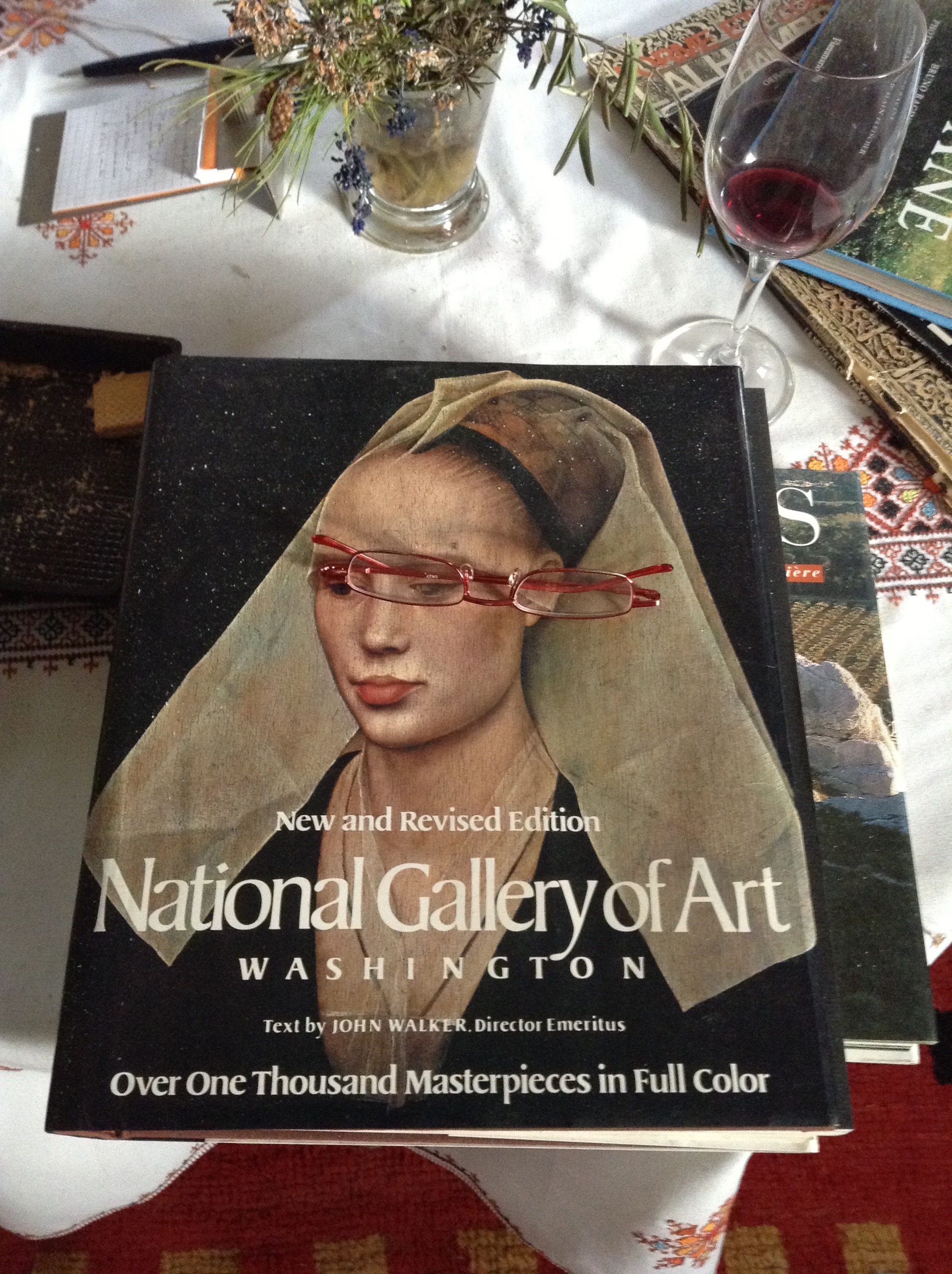
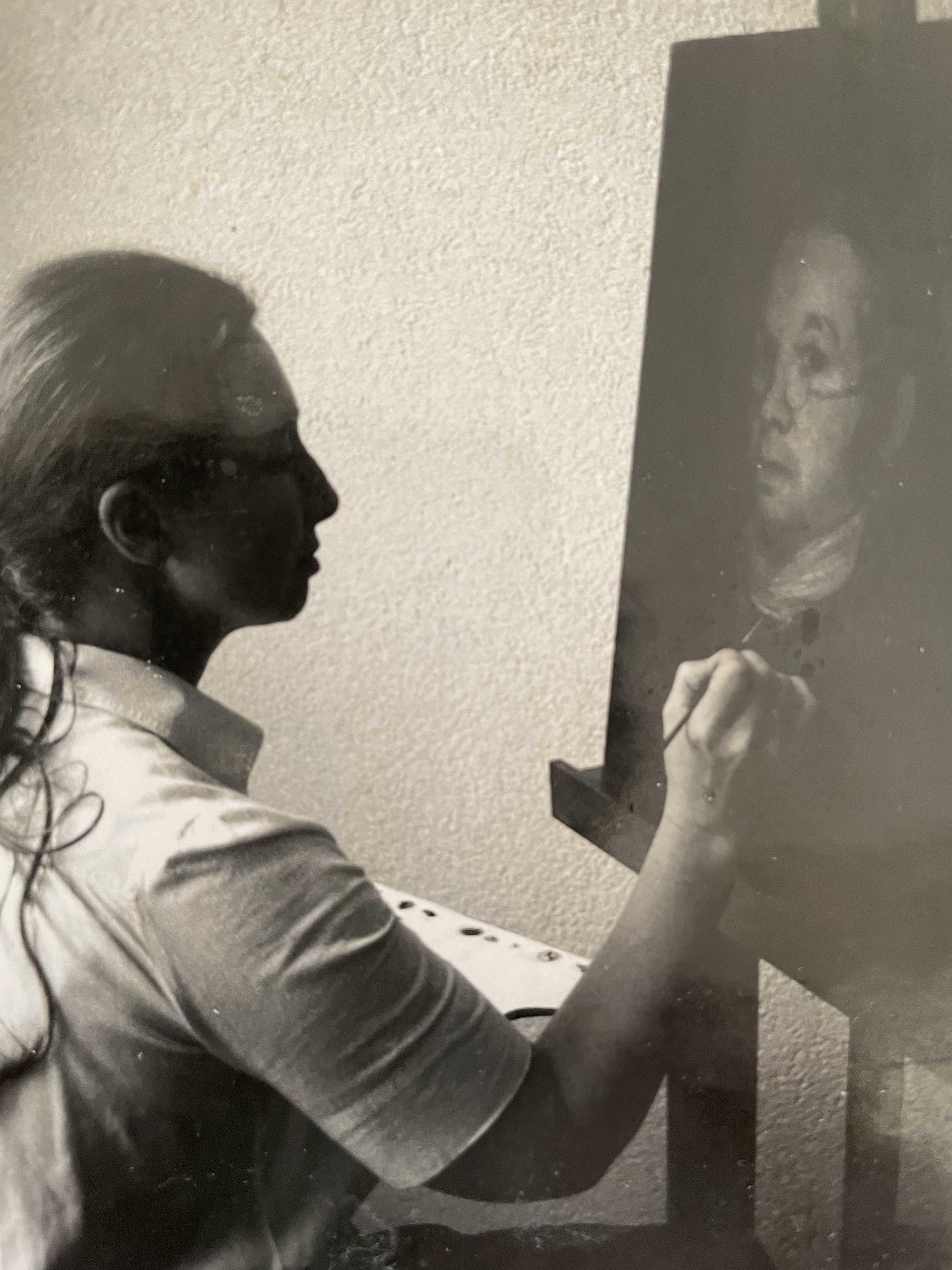
Some have, by profession, the need to take off these frames in order to question and decipher paint films so often worn by travels, misadventures and maybe, maybe mind you, by the millions of gazes who have caressed them. Watching Mum’s caring, slow, meticulous and reverent work adding the missing pigmented dot between colour-space A and colour-space B was always a delight. Finding the exact colour that, when ‘returned’ to its original place, would eventually allow what were unreadable fragments to become again an arm, a battle… or even a donkey (no one knew was even there!) was ever so exciting to witness. That paint and a painter’s magic can transport us to other times and places is not only obvious but the only way we could even see these places for centuries or discover what our bride-to-be looked like! Some rare times, it can also transport us into realms which are not of this world…

Oh, I so wish I could tell you all her stories, the stories she told but never wrote. The time she understood that this Modigliani had to be a fake (something about the ‘energy’ of the painting was ever so slightly wrong), the things she found when cleaning the “washing” and “kissing”1 added on the original layer (often because those areas were damaged or had worn out but, also, for religious, political or, more often, in the name of decency: dozens of voiles de pudeur—“modesty veils” as they are called in French that were added on baby Jesus’ sex—, but also a lover turned into a staircase!), the day she left Piero della Francesca’s lacerated portrait of Malatesta in the company of his wife’s (which the tyrant had had murdered and was face-to-face again with, perhaps for the first time in centuries), the day she delicately punctured a blob of oil paint on a Georges Mathieu painting (just to prove to me the paint wasn’t even dry, decades later), and the day she had afternoon tea with Rembrandt. The light was fast disappearing and, in the little room where she was working in a provincial museum in France, it was getting too dark to carry on the cleaning of one of his self-portraits. A low, slanting sunlight distorts colours and, although this is hard to recognise as our eyes adjust so well to slow changes, experience told her she would not be pleased the next day with the work achieved now. From below her magnifying visor, she took one last look at the painting and saw him. He was there. Rembrandt. Not his life-size portrait at her height on her easel, but the man himself. They gazed at one another for a long time, and the conversation they shared then, she could never (or would never) later express in words…
Ha, dusk! Dusk indeed is the Painter’s hour, that time of day when painters have theories on colour optics, drink too much wine, talk about AAArt… even perhaps have mystical encounters! In the fast-diminishing light, hues might indeed deaden or, at the very least, appear saddened; it has been said of them that they sometimes do. Maybe they understand it is time we must part. Perhaps, too, dusk echoes “crossing that border of illusion”, as Leonore von Sloten2 beautifully compares that threshold between zooming in and seeing only the materials: pigments, brushstrokes, pure Colour energy and zooming out to the point the materials disappear, and merge into a coherent image, a perfect ‘illusion’.

I don’t know if Beauty can save the world—those were my mother’s last words—but do believe that if we offer one another that “resiny, earthlike, and fragrant [material, we are made of] in exchange for human brotherhood”, then our time here has been well spent… Those were my opening words, from a beautiful story by Neruda3 (and isn’t “earthlike (pigment), resiny (binder) and fragrant (solvent)” just the most poetic description and absolutely perfect definition of paint ever?) These offerings won’t solve the mystery of why, but we will have revelled in it. And that is good.
“Try to gradate a little space of white paper as evenly as that [darkening sky] is gradated—as tenderly”4
John Ruskin suggested. This is what, with words, I’ve tried to do on the white page too… I hope I’ve also entertained but need to rectify something said earlier about some pigments that might have given you the wrong impression. Pigments don’t die, you know. They cannot. Not
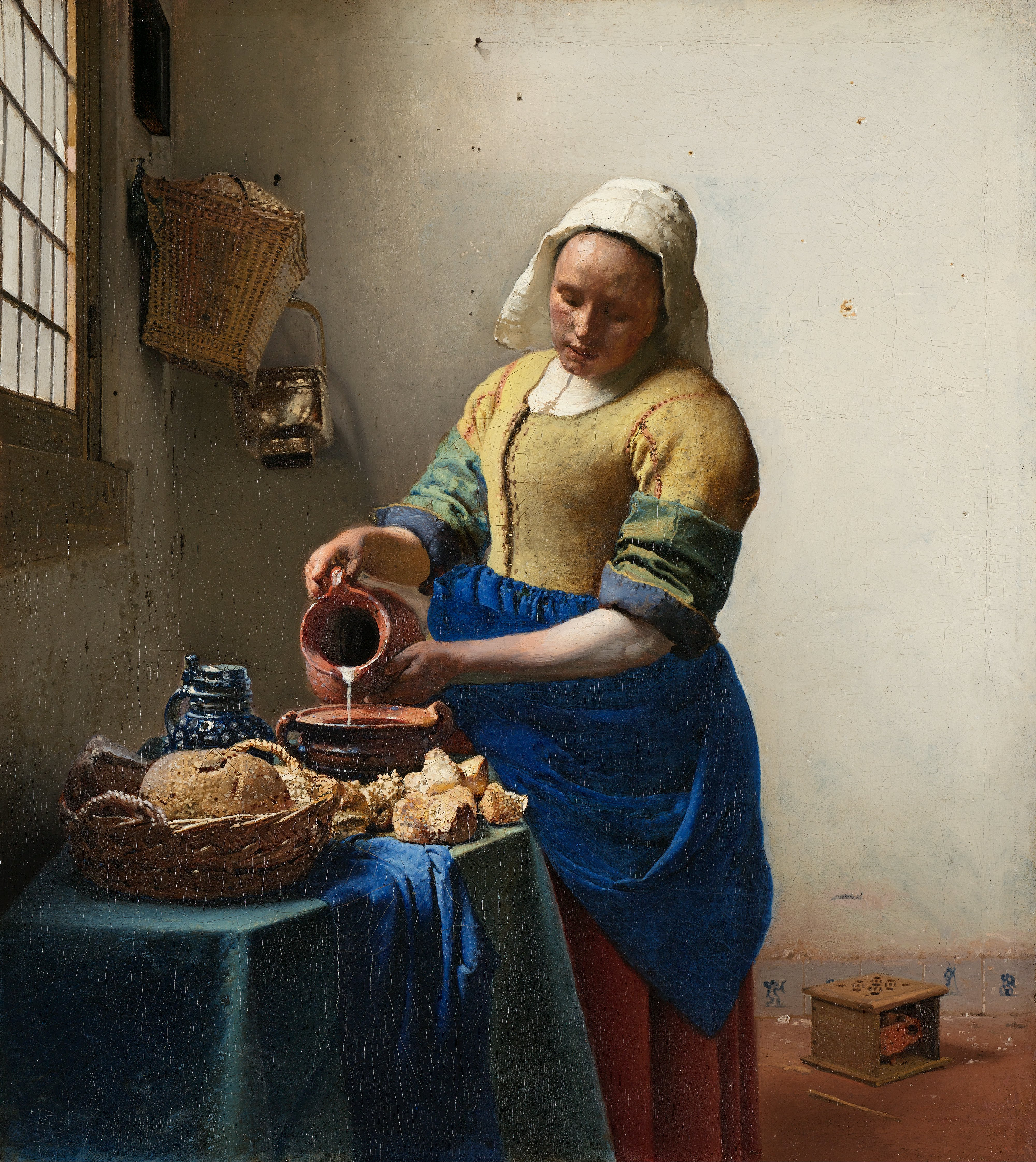
“As long as the woman from Rijksmuseum
in painted silence and concentration
day after day pours milk
from the jug to the bowl,
the World does not deserve
the end of the world.”
Wislawa Szymborska
In truth, pigments are forever…
I only hope my love for them has made you see, as I do,
our World in a Grain of Pigment,
Infinity in the Palm of your Hand…
or at the tip of your brush!
Until we meet again,
Peace and Paint
Hues in Tubes,
everything you’ve always wanted to know about PAINT
without daring to ask the shop assistant
is now available in its entirety on this website…
If you would like to begin the book at the beginning, please click here
otherwise, to browse the sections, go to the Table of Contents
Additional information and references
- To be “washed” and “kissed” comes from the literal translation of a chronicle (in the local dialect), which describes how, in September 1550, two well-known painters “cleaned, improved and corrected” Van Eyck’s masterpiece, the Ghent Altarpiece triptych, The Adoration of the Mystic Lamb! Improving and correcting Van Eyck!? Impossible! But, maybe a century after it was painted, his human-like face of the lamb was too confronting? (Curious? Here’s the link Online]. [Accessed 2 February 2025]. Available at: https://www.theartnewspaper.com/2019/12/18/ghent-altarpiece-latest-phase-of-restoration-unmasks-the-humanised-face-of-the-lamb-of-god ↩︎
- Leonore von Sloten in The Mater Podcast, Rembrandt’s materials with Petria Noble and Leonore van Sloten, https://open.spotify.com/episode/7BoqQN2kSi212sqr5AgHVX ↩︎
- Do read the full story of The Hand Through the Fence, Pablo Neruda childhood encounter, it’s enchanting! Online]. [Accessed 2 February 2025]. Available at: http://jjcweb.jjay.cuny.edu/awinson/public_html/eng100-act/eng100-articles/exchange.htm ↩︎
- Suzanne Fagence Cooper, (2019), To See Clearly; Why Ruskin Matters, p.53. Quercus Editions Ltd London, UK ↩︎
Discover more from in bed with mona lisa
Subscribe to get the latest posts sent to your email.


One Comment Add yours