WHATEVER!
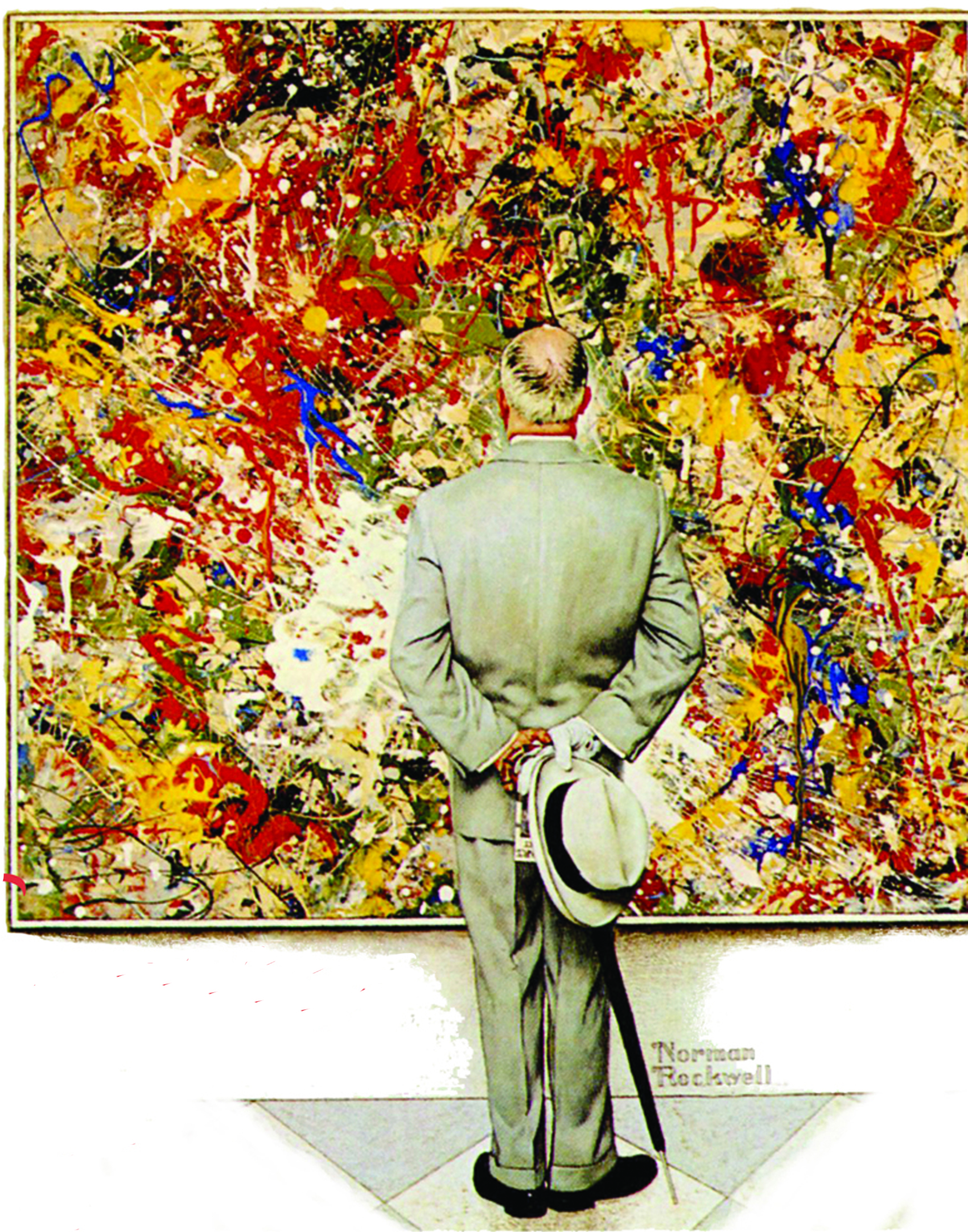
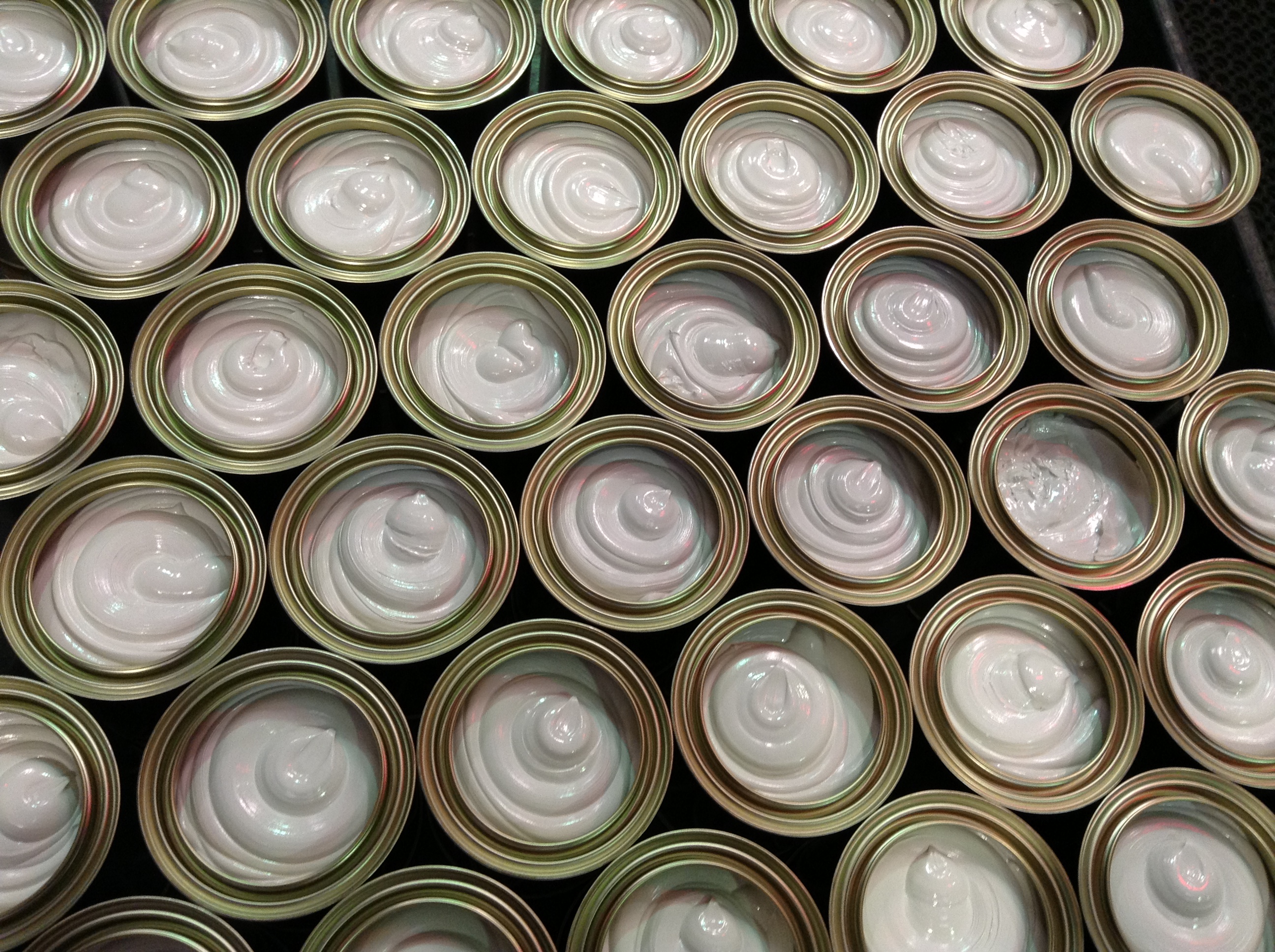
Just as Art, further down the track, doesn’t really ‘happen’ until the work and the reader/viewer/listener meet… paint doesn’t really ‘happen’ either until it meets a painter. Densely asleep in its tube, tub or pan, it is not the same ‘thing’ as when the medium is dancing under a brush, a palette knife, or a finger. (Nor is it comparable much to the one which settles in the final strokes the painter makes and turns into a dry film.) The “action” of our eyes/brain, co-creating colour with light and the pigment’s absorption/refraction of light waves, precedes deliberate human action. It is the gift and, yes, stands for all that is as of yet unexpressed.
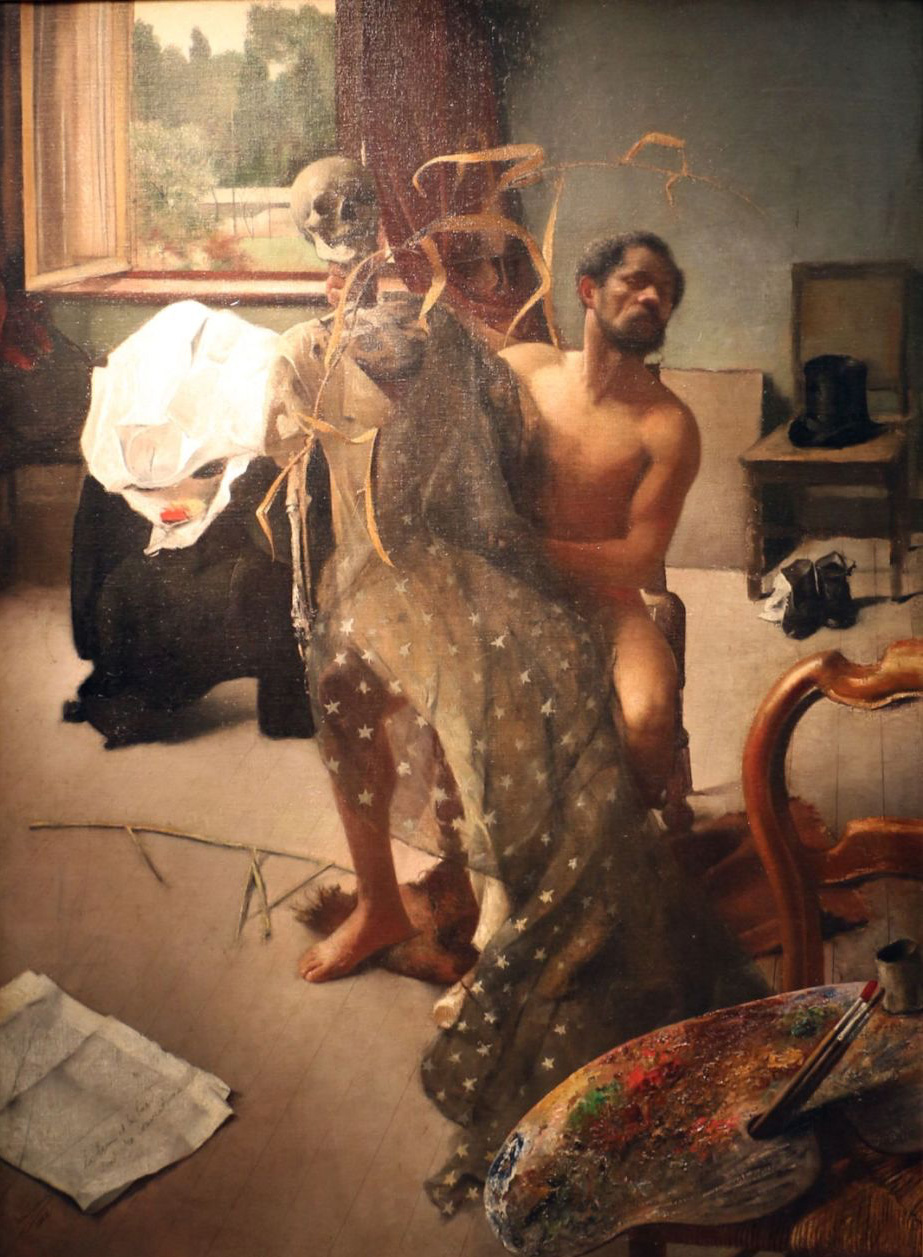
When a human hand approaches a pigmented ‘surface’ (aka paint, ink, rock…) with the intention of transferring some of that action/energy onto another surface, however, she is for sure hoping that some of her dexterity/talent will be transferred too but, in that often awe-filled moment, she is mostly hoping to do her subject justice; i.e. be true to the intentions of what will be soon revealed.
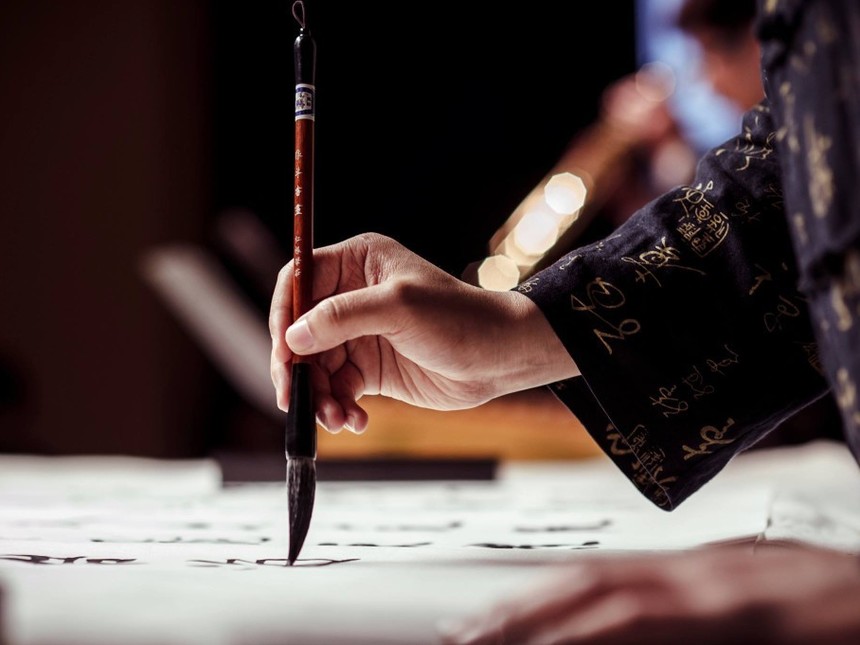
Artists worldwide, and since the dawn of Human Time, I presume, have felt this quickening of the senses when approaching material colour, the space “where most of the action is.” Yet some pigments seem to have incarnated this interactive plane in more spiritual ways than others. I see Lamp Black as a good example of that, as the ink it produces was so often, in Asian countries, the artists’ companion on the path to Beauty. Something neither the artist nor the ink would create but reveal, through reverence, in the fire of the action.
And so, yes, now that all is milled and mixed, said and done, you, too, need to choose a dancing partner. Every paint has a body, of course… Ah, mais oui! But which body attracts you?
Although viscous, today’s oil paint loaded with more pigment than ever before—maybe because of its venerable status too—is, on the whole, stiffer, more reserved than the blobby acrylic heavy body. While polymer bodies, because they can, might even be open, flowy or liquefy in total abandonment. In fact, by the time they have turned into delightful inks or watercolours, the paints’ bodies seem to have become… irrelevant. Evanescence? Yes and no. However liquid and transparent, something must remain, and a body must be there. Always, it is the “fecund” marriage of some little dry rocks with a moist binder that creates this new animal, this some-body. An embodiment needed for paint to dance with its most relevant partner, you.
These flowy ones aside, maybe all paint pastes, as they come out of the tube, could be termed precisely that, a little bit pasty, so you’ll need to add a little ‘something’ to get them going. Champagne might work wonders at the club, but the modest watercolours and gouache only want water as vehicles, while dried watercolours in pans couldn’t even begin to dance without it. For oil and acrylics, it could be as basic as adding more of what already exists in the paint, linseed oil (with a tad of solvent, so all that oil doesn’t take ages to ‘dry’) or a polymer painting medium (water works fine too.2)

(However, please do not just drag your paint with gallons of turps or water to get more flow. Many mediums exist on the market that will give you the viscosity you are after, but too much water /solvent will kill the golden goose you’ve just bought (let’s admit it, good paint is not cheap) as both practices will simply undo what the paintmaker has so lovingly done, i.e. coat all the pigment particles with a binder. Compromising the longevity of your paint-film-to-be seems pointless, a saving which, further down the track, will most probably leave you with a fragile paint film. Your oil paint film will crack (looking nothing like the divine craquelures on a Vermeer, I can assure you), or, as I’ve often witnessed, you’ll just be able to dust off your acrylic paint film in a few years’ time. The little hooks of the polymer film having no close enough friend to hang to and make that tough film, they’ll have just given up hanging on there altogether!)
Remember this great quote from early on in the book? “Oil painting without media, or with only linseed oil and turpentine, is like going to a French restaurant to order boiled duck, no sauce. An appropriate medium does for oils what a French chef does to an otherwise bland and greasy dead bird, and the results, like Duck a l’Orange, are exquisite.”3
Now would be the time to understand how to turn your greasy dead bird into an exquisite diner, I imagine, but I decided not to enter with you into the infinite world of painting mediums because
1) paintmakers give you extensive knowledge of the very diverse options
2) there are many, many mediums (sometimes too many gels, pastes and mediums, I think and, acrylics being soooo flexible, what you can do with them reads more like the Kamasutra, really!) Suffice is to say that the addition of these will birth another myriad of options for the artist and dramatically alter our perception of the finished work + they are not the bird/paint, just the sauce you will enjoy most (totally personal) and which will help you achieve the result you want (totally personal.)
But back to our interesting pigments in paint, how do they behave on the dance floor? Are some better dancers than others? Well… and as should be expected by now, each will express quite a character! Some will display their coarse and gritty nature, these dramatically textural ones ever so different from those silky, good at elongating, sleek others. Because each has its energy, too, of course. (Serious people call this rheology.) Some change viscosity and become more fluid, less viscous while the dance is in full swing. We call them thixotropic. While those bodies which thicken and turn more treacly, we name rheopectic, even dilatant… not to be confused with dilettante or debutante naturally.4 You might think my comparison is something of a writer’s imagination gone wild, but will you not smile if I told you that paintmakers, who already classify paint as having heavy or flowy bodies, often talk of other pigments’ properties in paint in body terms too? Describing the ‘buttery’ ones as having short or even no “legs”, while the ropey, stringy ones have long ones. And what are legs for, may I ask, if not dancing?!
Let’s remember, too, that bodies have… a smell of their own5. I am partial to the oily, rich and intoxicating—especially when mixed with other deliciously toxic and volatile substances—but your head might spin in its presence. In fact, clearly, some might not be partners you would choose to dance with. Not your style at all. Think of oil sticks (just the name), possibly the most rigid paint due to the addition of waxes to the linseed oil so that it stays in shape and, yet, possibly the messiest craziest mark-maker in the end! If these don’t appeal, look around and find another dancer, more sensual, more voluptuous. You choose. All tastes are accepted here… the joy in the moves is all that matters. I would never believe (or trust) a painter if he told me he didn’t profoundly enjoy the dance-trance of painting. Forget good, bad, perspective, light, composition, subject matter, or anything else that needs the mind. We are talking body language here and the delight, never to be forgotten once tasted, of guiding colourful paint on the dance floor.
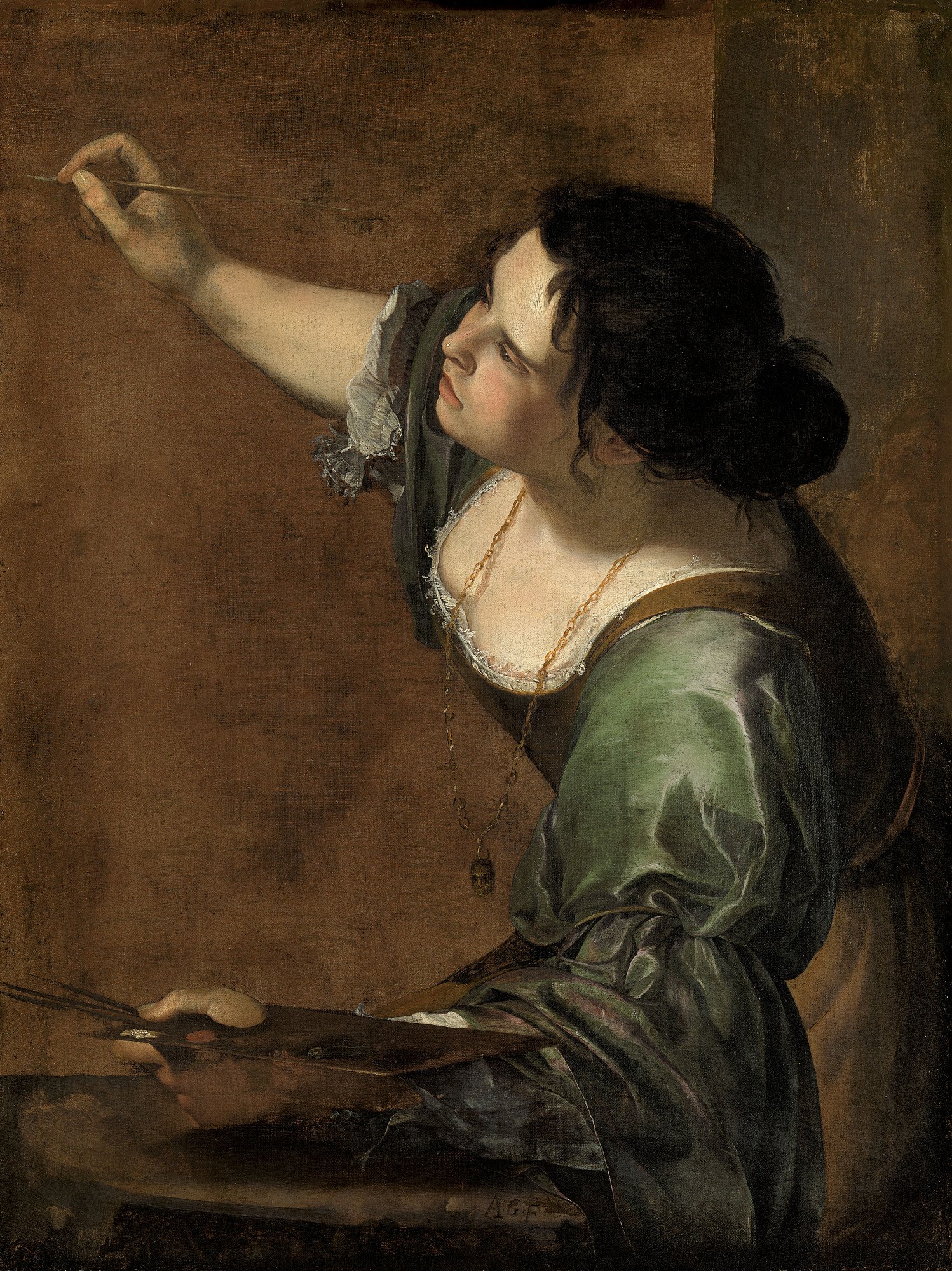
I find Artemisia Gentileschi’s Self-portrait as the Allegory of Painting quite the best evocation of that bodywork… “a beautiful woman with full black hair, dishevelled, and twisted in various ways, with arched eyebrows that show imaginative thought, the mouth covered with a cloth tied behind her ears, with a chain of gold at her throat from which hangs a mask, and has written in front ‘imitation’.” No stifled mouth in her painting, however. Unlike Cesare Ripa, whose above definition of the Allegory of Painting in his Iconologia implied Painting was dumb, I don’t believe Artemisia agreed to that, not for one moment (and in neither sense of the word either!)
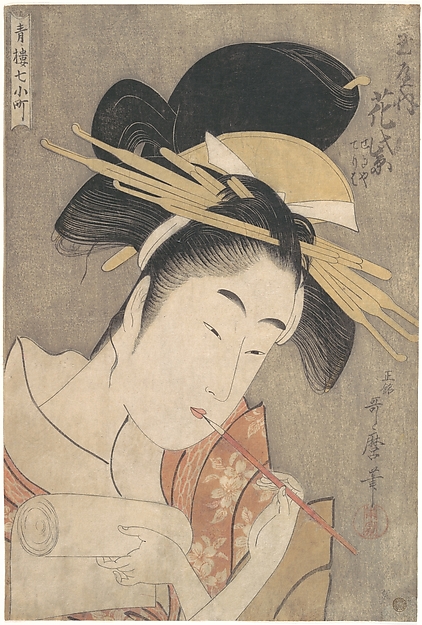
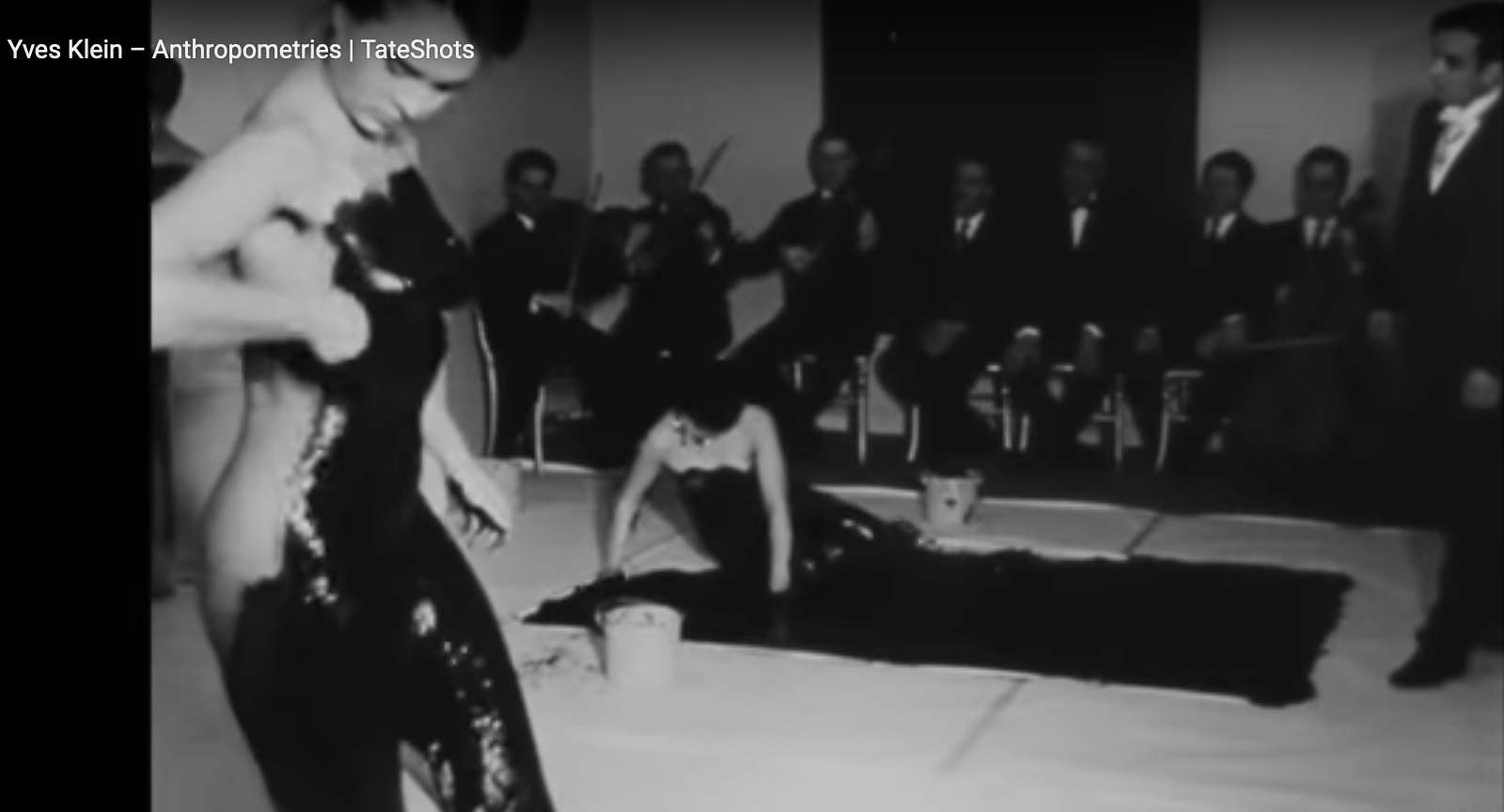
The way your paint-partner moves will impact how your body moves. You cannot play with ink or watercolour on a straight easel… unless you are after some interesting dripping effect. Nor can you pour paint, Pollock-like, sitting down.6 On the other hand, playing with tempera which dries so quickly it can’t easily be blended on the surface but needs delicate hatching to apply the colours, you might enjoy a table or an easel but most certainly a chair. Standing, sitting, crouching, stretching, the artist will probably be holding a brush, a palette knife, or any other implement he can push his paint around with, so these ‘accessories’ are definitely part of the performance. Here is perhaps not the place to go into more detail about them, though and yet… they matter. Oh, my Muses, they do. Because a brushstroke is a brushstroke is a brushstroke… just as a kiss is a kiss is a kiss. And as we know, some are passionate, some languid, some precise… just as brushes know how to be passionate, languid, or precise, while painting knives might be more for those who like it tough. (And please admire my restraint as I decline to venture into the options offered by the “instrument of instruments”, the painter’s hand itself, which can do it all: caress, smooth, spread or scratch at will… Not to mention how Yves Klein used women’s bodies as “living brushes”, as I’m not entirely sure this is still an option today.)
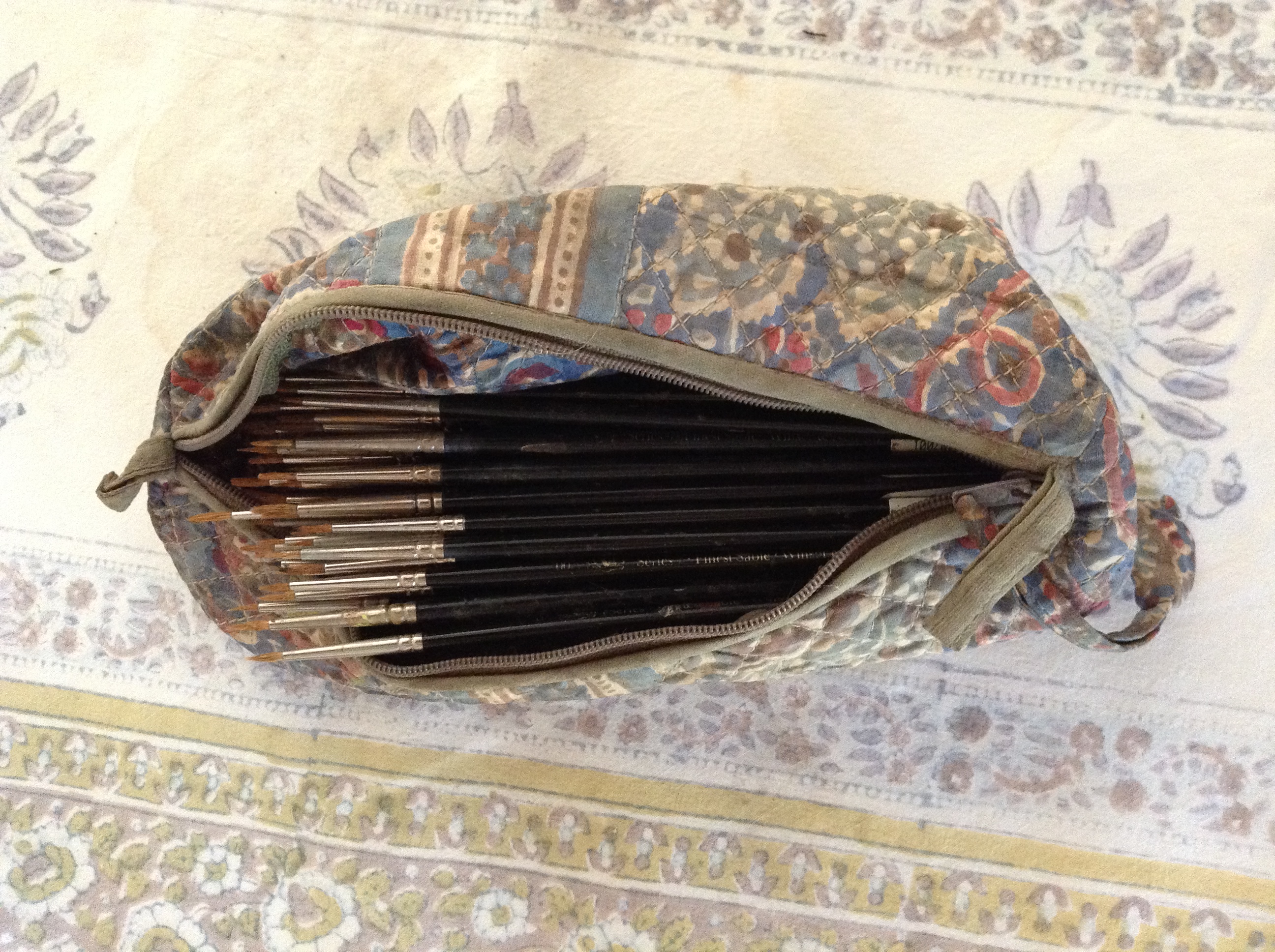
A few years into my mother’s relationship with a painter, they decided sharing his studio might be a good idea. He had moved into our house but still went to paint daily in his light-filled large space while mum restored the few private artworks she accepted in our sitting room. It seemed sensible, but her easel was back at the house a week later. Pierre Jaouën was an ‘action painter’ working at that stage in watercolour on large surfaces (paper he stretched on wooden blocks) with huge mops (brushes made for him in these oversizes by Raphael.) While Mum worked, all her restorer’s life, with triple zero Winsor and Newton sable brushes, ideal for creating these tricky rigatini7 or dotting canvases with the most minute amounts of paint. The patient, detailed and humble work of one, invisible (when done to perfection) vs the full throttle of self-expression unleashed… how did they even imagine this combo could coexist in the same space for one minute? The energies at work were totally incompatible. I laugh now, imagining them… he, more in the league of a tennis champion, running and breathing hard around the work on the floor while delivering bold and generous strokes, (wanting to create art that was a visual representation of the motion and energy of his “inside world”, as Jackson Pollock suggested he did), she sitting still and meticulously dabbing. Tell me how that could work!
Don’t get me wrong, either. I even named my art shop Still at the Centre for that reason, as I’ve often experienced the wondrous stillness at the centre of creative ‘flow’ and know painters can be as calm as the eye of the tornado whilst moving furiously across the dance space. Just as dancers enraptured in their moves can be. But restoring an artwork, if pretty meditative, will not quite get you into that transe; at least, I’ve never witnessed so.
God has no hands (but ours), St Terese of Avila said. Indeed, even if paint “should be like the breath on the surface of a pane of glass”8, as Whistler poetically described, all dances with paint will leave traces, however imperceptible, and these alter our perception of the work.
“The hardest thing for me when I settled on how to paint was getting rid of the active brushwork, which abstract expressionism was all about. That’s what I was brought up on. De Kooning was the Vladimir Horowitz of the brushstroke. It was incredible. But I’m going for a smooth, finished surface. Each area still has its own subtle texture, the skin, the metal of the tractor. A painting is never really flat. When you really look at a Mondrian, you see it’s lumpy. The surface is alive. He built up paint over time, through changes based on staring so long at the pictures that the line began to move in front of his eyes. That’s the time element in Mondrian. I used to stare at his Broadway Boogie-boogie in the Museum of Modern Art just to watch the forms start jumping. “ Philip Pearlstein9
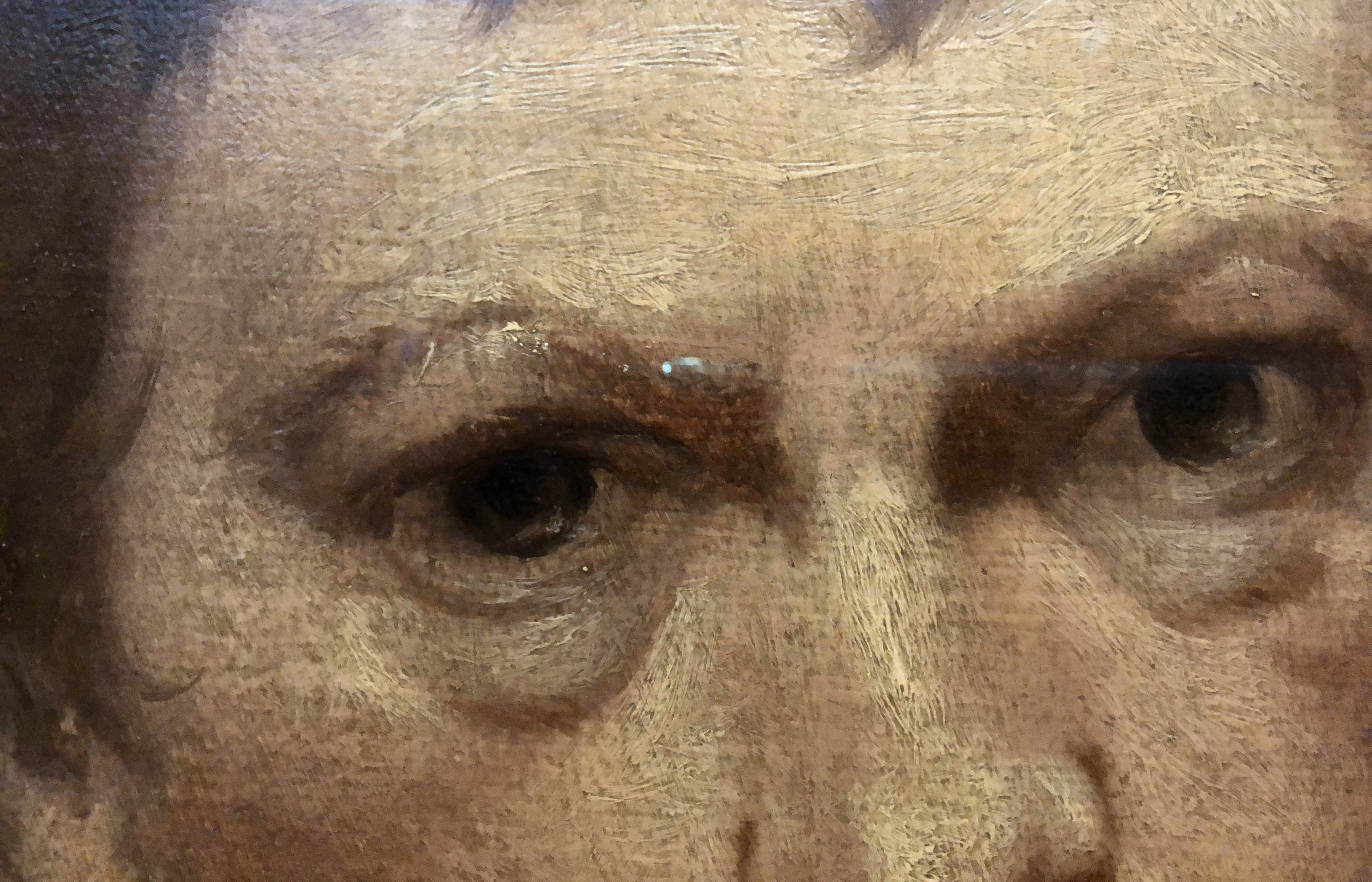
Texture might even change colour as Stanley Whitney remarked:
“Color for me is all about touch. Whether its thicker or thinner — how you touch the canvas is different. If I put on a different weight, its a different color.”10
We understand quite instinctively, I believe, the shifts and aliveness textures bring and yet it took, perhaps, the monochromatic works of Malevich for us to completely integrate that the texture of a finished painting plays such an important part in the viewer’s experience (precisely why going to museums is so thrilling vs seeing paintings in books.) It is not that before him painters didn’t use impasto or excite our senses with the third dimension — transgressing Leonardo’s command for an absolute brushless work which would not reveal the painter “as no such signs of the human hand could be found in nature” — but that is strikes us even more, of course, in a monochromatic artwork. Soulages, who we have just talked about, does that endlessly with black paint, switching at some stage in his career from oils to acrylics, as the incredible flexibility of the acrylic paint film offered him even more texture possibilities.
So tension always exists, which is to be expected; you are body-body dancing, after all. But reward is also there. If you stick to your practice and go to the dance studio regularly, after a few months of dedication, hey presto! You should have… a body of work!
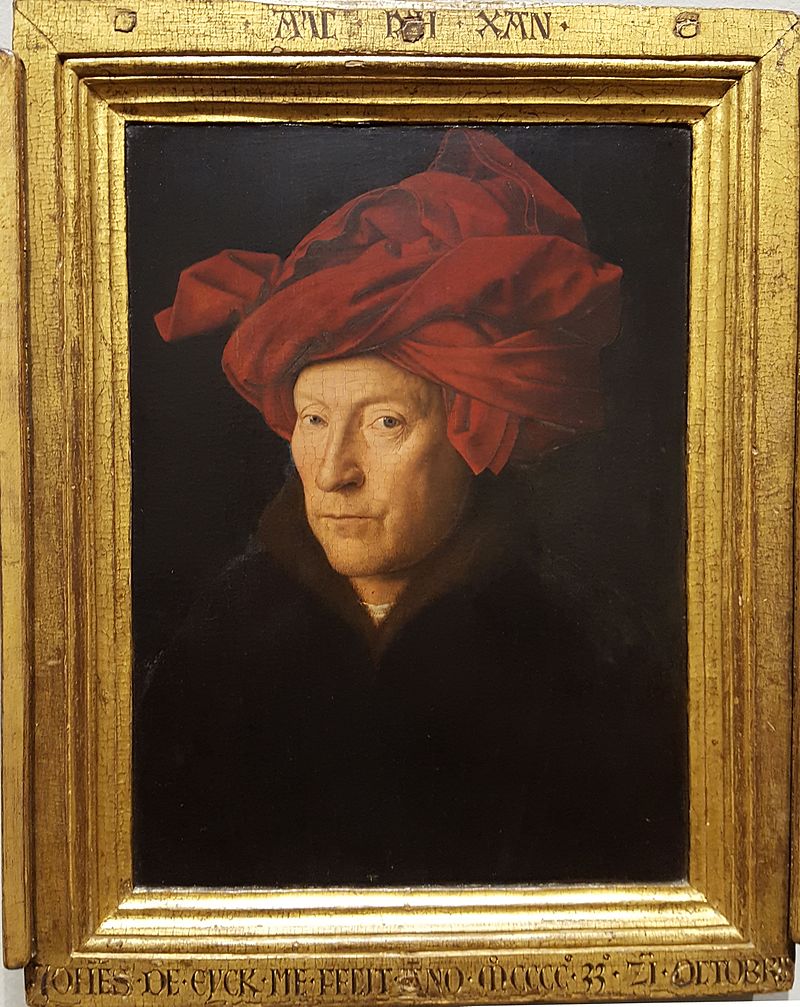
I feel like a little postscriptum about signatures is in order. If you are pleased with yourself, you might wish to sign your painting, and… I get it! Greek potters may have started the practice to distinguish themselves from lesser peers, perhaps even to ensure a measure of posterity, but what is near certain is that the first to sign his presumed self-portrait—the earliest known panel self-portrait—“Portrait of a Man in a Red Turban”, as it is now called, was our same Jan van Eyck (who did not invent oil paint.) Most of his works display somewhere a pun on his name with variations on als ich kan or aic ixh xan “As Best I Can”, which is, of course, what all painters strive for. Yet take a good look at the man—if that is indeed him—and somehow, it’s hard to believe modesty was his forte. He signed “Jan van Eyck Made Me on October 21, 1433” on the frame of this one, while other portraits bear the proud “I, Jan van Eyck, was here.”
Compare that to Van Gogh’s take on the subject a few centuries later:
“14 August 1888. I’d begun signing the canvases, but I soon stopped because it seemed ridiculous. On one seascape, there’s a flamboyant red signature because I wanted a red note among the green.”11
In truth, even if it was a good way to add that “little red touch” you are taught makes any painting just that bit more exciting, flamboyant signatures have just about disappeared today while signing the back of your work is quite the trend. Could be that 1) writing in paint is difficult, 2) many artists hate their handwriting, 3) we’ve come to think of signatures as something that somewhat spoils/interferes with the reading of the artwork… Still, it increases the value of the work, of course (that is, if you are/become famous), so signing the back of your canvas/paper is an option but on the canvas or paper themselves. (Please do not sign your stretcher bars or mat boards, says I, wearing this time my framer’s hat. They are not integral to the work and might need to be changed someday for whatever reason.) You could also—and I really love it when I suddenly discover one of those signatures in a painting—make it an integral part of the work but… hide it somewhere!
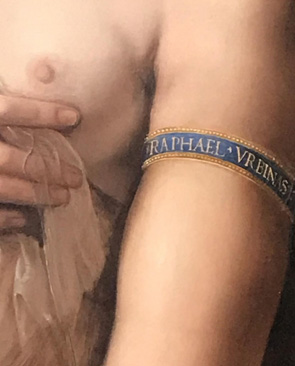
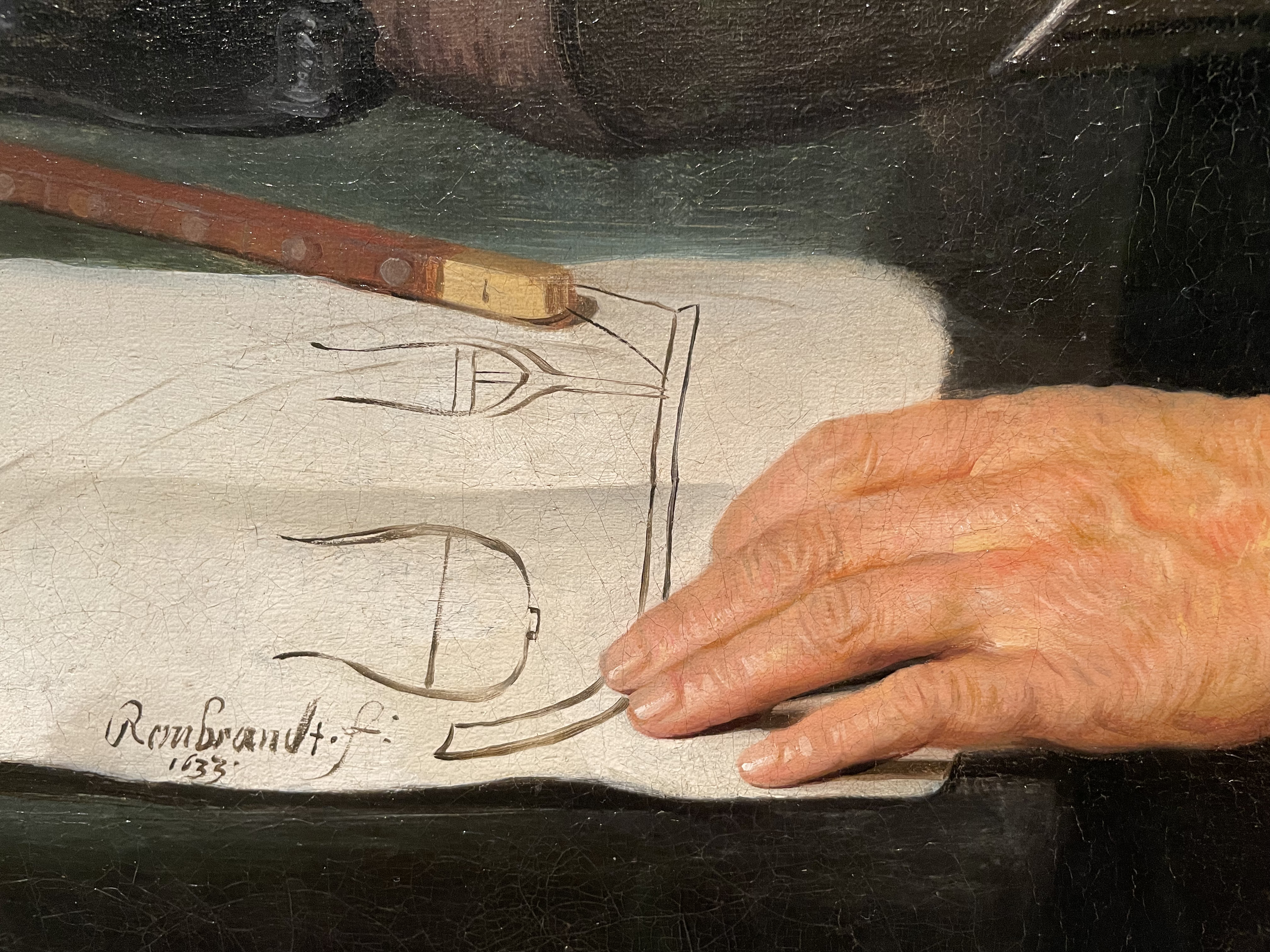
One night, I had the most beautiful dream; a visitation of sorts. I was delivering bread to Buckingham Palace and, at the top of the stairs, was the Queen who asked me if I wanted to visit her private art collection. I said yes. Of course! Then, for what seemed like hours, we walked in these long stately rooms and corridors where painting after painting was hung… a tailored-to-suit-my-taste display as all my favourite painters were there! But, these were also totally unknown, never seen before artworks. Yet, I knew immediately this one was a Giotto, a Pontormo, a Carracci, a Gozzoli, a Crevalcuore, a Matisse, a Singer Sargent, a Wyeth, a Scheele or a Spilliaert… what a magical promenade that was. Don’t know, even if with the best artistic ability—which I do not possess—I could have re-created any of them when awake, but they were absolutely, totally, undeniably “signed” by the artists’ hands… style is a strange, indefinable thing, isn’t it? So perhaps do not worry too much about your name being present in/on the artwork; it will be there anyway. YOU will be there anyway…

On the cave or the palace wall, on the wood panel, the sheet of paper or the canvas, entwined forever, paint and painter offering a testimony of their presence, a glimpse, for all who can see, who can feel, of their moment, of the energy of their pigmented and human dance. Each brushstroke revealing further details of the intimate encounter, turning us slowly from visitors at museums into voyeurs. By then, how, indeed, “can we know the dancer from the dance?12”
I agree with John Olsen, it ought to be banned, really…
Hues in Tubes,
everything you’ve always wanted to know about PAINT
without daring to ask the shop assistant
is now available in its entirety on this website…
Jump to the next section of the book by clicking here
If you would like to begin the book at the beginning, please click here
otherwise, to browse the sections, go to the Table of Contents
Additional information and references
- This painting has always made me laugh… despite only seeing his back, you can soooo feel the total disapproval of the viewer in front of this artwork! But Steven Spielberg has something else to say about it, which I found worth sharing: “The Connoisseur is a fascinating painting for me. …Rockwell actually had to do a Jackson Pollock. He had to get that drip effect on that canvas. That means he had to completely change the paradigm of his style to accomplish a Jackson Pollack and a very convincing Jackson Pollock, before going back to his sort of conventional human characters. For me that represents how an artist can suddenly change his style and be unrecognizable in one form in another medium and then return to the style that we’re familiar with.” ↩︎
- “There seems to be a misunderstanding out there that is it bad to add water to acrylics, this is not so. It is perfectly fine to add water to acrylics. The only lookout if adding too much water, meaning the mixture is mostly water and just a small amount of a paint or medium, is the film can become water sensitive, or water soluble like watercolors. So if you applied another water based medium or paint on top of an overthinned paint, you could see some color bleed into that wet medium or paint. The addition of a lot of water basically means the acrylic binder has been thinned down and there is now more water in the paint than binder, so there is not much left holding down the pigment, which is why the color can lift. [Accessed 2 March 2021]. Available at: https://justpaint.org/mediums-vs-additives/ ↩︎
- Saitzyk. S. ( 1987, revised 1998) Art Hardware: The Definitive Guide to Artists’ Materials, p.32. [Online]. [Accessed 13 November 2024]. Available at: http://www.trueart.info/ ↩︎
- “To take this a step further, we can classify products as having long or short rheology. Again, this relates to flow, with long rheology being closer in consistency to honey. We affectionately refer to this quality as being ‘taily’ since it drizzles off a palette knife. Products that are long recover from the deformation of a brushstroke or palette knife more slowly, which allows them to relax or level. […] The way products react under shear stress tells us a lot about their viscosity or how much they resist flow, which again, is conceptually related to how thick or thin a product may feel. A low shear rate on a rheometer, for example, simulates the stress of squeezing paint out of a tube while a mid-shear rate measures something closer to a brush application. When shear is applied, most acrylics will see a drop in viscosity over time that corresponds to the amount of shear. As shear is reduced, some products will recover very quickly and others will slowly return to their original viscosity over time. This is a quality known as thixotropy.” [Accessed 2 March 2021]. Available at: https://justpaint.org/understanding-the-feel-of-acrylics/ ↩︎
- Rembrandt even said that one should not approach a painting too close, as you will get upset by the smell of the paint. The Mater Podcast, Rembrandt’s materials with Petria Noble and Leonore van Sloten, at 51″ https://open.spotify.com/episode/7BoqQN2kSi212sqr5AgHVX ↩︎
- “On the floor I am more at ease. I feel nearer, more a part of the painting, since this way I can walk around it, work from the four sides and literally be in the painting.” Jackson Pollock ↩︎
- “Rigatini are a technique used by restorers to close the lacunae using only thin vertical lines (riga, or line in Italian, is where the name rigatini is derived from), layering no more than three pure colours, which can only be mixed optically through their superposition, so as to conserve the luminosity of the original painting. This “linear” approach is meant to be a signature of the restorer’s intercession and can usually only be seen from the side so as to let the viewer enjoy the experience of the painting.” [Accessed 2 March 2021]. Available at: https://www.reddit.com/r/ArtHistory/comments/psqees/tratteggiorigatino_retouching_in_the_roma_style/?rdt=57170 ↩︎
- As quoted by Cooper, S.F. (2019 )in To See Clearly; Why Ruskin Matters, p155. Quercus Editions Ltd, London, UK ↩︎
- As quoted by Kimmelman, M. in The Accidental Masterpiece, On the Art of Life and Vice Versa, p.165.The Penguin Press, USA 2005 ↩︎
- Yau, J. (2008) I Want to Paint Every Color in the World, an interview with Stanley Whitney. Hyperallergic [Accessed 2 March 202e]. Available at: https://hyperallergic.com/455180/stanley-whitney-i-want-to-paint-every-color-in-the-world/ ↩︎
- van Gogh, V., from 14th August 1888 in The Complete Letters of Vincent Van Gogh (1991) New York Graphic Society, New York, U.S.A. ↩︎
- Yeats, W.B. Among School Children in The Collected Poems of W. B. Yeats (1989 ) Macmillan Publishing Company. (Many interpret this line as an observation that some creative acts are so intimately connected to the artist who created them that separating the two is almost impossible.) ↩︎
Discover more from in bed with mona lisa
Subscribe to get the latest posts sent to your email.


One Comment Add yours